Eating Slate Pencils in Pregnancy: Safe?

This article is part of our guide on Obstetrics Care in Chennai — see the full treatment overview, success rates, and costs.
Quick answer: Slate pencil cravings in pregnancy are almost always pica — and in my clinical experience, 9 out of 10 times it is iron deficiency waving a flag. Slate pencils themselves have no usable calcium, can cause constipation and tooth damage, and uncontrolled brands may contain lead. The fix is not willpower — it is a haemoglobin test, iron correction, and a safer crunchy substitute like roasted chana. Please do not feel embarrassed to tell your doctor about it.
"Ma'am, please don't judge me — I have been eating slate pencils for the last two weeks." I hear this at least once a week in my Egmore clinic, usually whispered, usually in the first trimester. I want every pregnant woman reading this to know: there is nothing shameful about it. It is a real, medical, treatable condition called pica, and in almost every patient I see, we trace it back to a simple iron deficiency. Let me walk you through exactly what it is, why it happens, what the risks are, and the practical steps we take in the clinic.
Why do some pregnant women crave slate pencils?
The condition has a name — pica — defined as the persistent craving and consumption of non-nutritive, non-food substances for more than a month. In pregnancy it is surprisingly common. Studies suggest roughly 1 in 10 pregnant women in India experience pica at some point, though I suspect the real number is higher because most women are embarrassed to mention it.
The most common causes I see in my practice are:
- Iron deficiency anaemia — by far the biggest driver. Indian women often start pregnancy already iron-depleted, and the growing baby doubles the demand. The body seems to "reach" for anything that tastes earthy or mineral-like.
- Zinc deficiency — a quieter second cause, and often co-exists with iron deficiency.
- Heightened taste and smell — pregnancy hormones sharpen both senses and distort them. Foods you used to love become unbearable, and textures you never thought about become fascinating.
- Cultural habit and anxiety — some women have eaten slate pencils since childhood, and the craving resurfaces under the stress of pregnancy. Others use it as a quiet coping mechanism for anxiety.
It is not a sign of weak willpower or poor parenting. It is a body signal, and it deserves a proper clinical response, not judgment.
What happens if you eat slate pencils during pregnancy?
I want to be clear about what we actually know — and what the real risks are. Slate pencils are not food. They have no digestible calcium, no iron, no usable nutrients at all. What they can do is cause the following:
- Digestive problems — the gritty, abrasive texture irritates the stomach lining and the small bowel. Constipation is the most common complaint I hear, followed by abdominal pain and occasional nausea.
- Tooth and gum damage — chewing a hard stone-like substance daily wears down enamel and can crack fillings. I have had patients in their third trimester come in with chipped molars from slate pencil habits.
- Appetite blunting — this is the risk patients underestimate the most. Slate pencils take up stomach space and dull your appetite for real food. That means your iron, protein, and folate intake drops at exactly the time you need them most.
- Contamination risk — slate pencils sold in loose packaging or small kirana shops are not quality-controlled. Some contain lead and other heavy metals. Lead crosses the placenta freely and is linked to developmental problems and low birth weight. There is no safe level of lead in pregnancy.
- Mineral imbalance — the chalky material can interfere with the absorption of the minerals you do eat. So every slate pencil not only gives you nothing, it steals a little from your next meal.
Individually none of these are catastrophic. Together, over weeks, they can quietly erode the nutrition that your baby depends on.
Possible reasons behind slate pencil cravings in pregnancy
Here is what I usually check in the clinic when a patient mentions slate pencil cravings. None of this requires expensive investigation — it is all basic bloodwork.
- Haemoglobin (Hb) — a simple finger-prick or serum test. Anything below 11 g/dL in pregnancy is anaemia, and below 9 g/dL is moderate to severe.
- Serum ferritin — the more sensitive test. Ferritin tells me whether your iron stores are empty, even if your haemoglobin still looks borderline-OK. I want ferritin above 30 ng/mL in pregnancy.
- Serum zinc — cheap, widely available, often forgotten. Low zinc frequently co-exists with low iron.
- Serum calcium and vitamin D — these rarely cause pica directly, but they matter for the bigger pregnancy nutrition picture.
- Thyroid function — I check TSH whenever cravings are unusual, because untreated hypothyroidism can present with fatigue and weird cravings.
If the bloodwork comes back normal and pica still persists, we then look at anxiety, cultural habit, and rarely obsessive-compulsive patterns. But in my clinic, roughly 9 out of 10 cases resolve with iron correction alone.
Nutritional deficiencies linked to slate pencil cravings
Since iron is the villain in most cases, here is the practical iron plan I give every pregnant patient — it is the same one that has worked in hundreds of consultations.
Food-first iron (best absorbed)
- Ragi (finger millet) — the single best Indian food for pregnancy iron. Ragi dosa, ragi porridge, ragi mudde — pick the form you enjoy.
- Dates and dry figs — 4–5 dates a day is a reasonable sweet snack.
- Chicken liver, mutton liver (if non-vegetarian) — the densest heme-iron source, once a week is enough.
- Palak (spinach), methi (fenugreek), drumstick leaves — rich in iron and folate together.
- Rajma, black chana, horsegram (kollu) — plant iron with protein, a great lunch combo.
- Jaggery (unrefined) — small amounts in place of sugar.
Absorption boosters (do this at the same meal)
- Add a squeeze of lemon or a slice of tomato or amla to your iron-rich plate. Vitamin C more than doubles the iron absorbed from plant sources.
- Avoid tea or coffee within 1 hour of an iron-rich meal. The tannins block absorption significantly — this is something my patients almost always get wrong.
Oral iron supplement (when food is not enough)
- If your haemoglobin is below 10, I usually start oral iron — ferrous sulphate, ferrous fumarate, or a gentler iron polymaltose depending on your stomach tolerance.
- Take it with vitamin C (lemon water or amla), not with milk or antacids.
- Occasional black stools are normal — that is the iron, not bleeding.
Most patients notice the slate pencil craving start to fade within 2 to 3 weeks of proper iron correction. That time-course alone is a clue that the craving was nutrient-driven.
Safer alternatives to manage unusual pregnancy cravings
While the iron plan takes effect, you still need something to chew on when the urge hits. These are the safe swaps my patients use most:
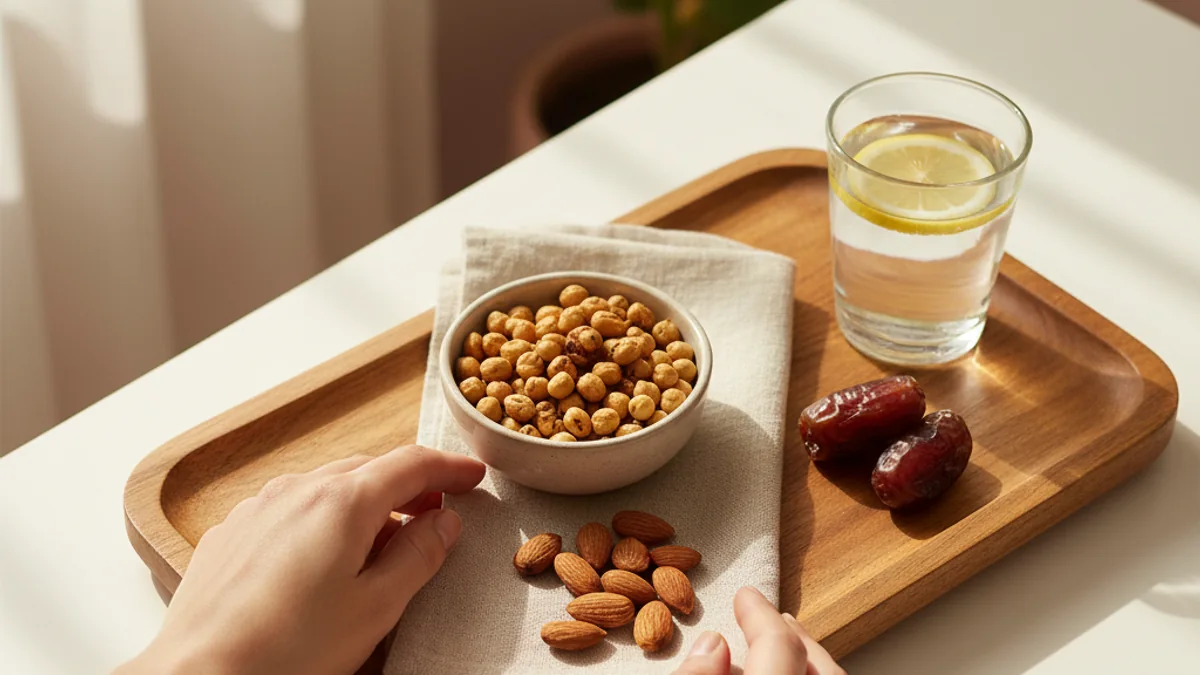
- Roasted chana — crunchy, iron-rich, protein-rich. The single best substitute.
- Makhana (fox nuts) — light, calcium-rich, easy on the stomach, satisfies a dry-crunch craving.
- Dry-roasted almonds or walnuts — a small palmful at a time.
- Dates or dry figs — sweet iron hit, replaces the "mineral" sensation.
- Puffed jowar or puffed ragi — if you want the light, chalky-crunchy texture.
- Cold cucumber or carrot sticks with a pinch of lemon — for the cooling, hydrating swap.
- Fennel seeds (sombu) after meals — traditional and safe.
I usually tell patients: keep one safe crunchy snack in your purse at all times so that when the craving hits, the safe swap is closer than the slate pencil. That single habit change cuts pica frequency significantly within the first week.
Importance of consulting a healthcare provider
I want to be very direct here: please do not try to manage pica by willpower alone. The craving is a symptom of something treatable, and the treatment is simple once we identify the cause. Please come in if:
- You are eating slate pencils, chalk, soil, brick, or ice daily for more than a week
- You have fatigue, breathlessness on mild exertion, or pale palms and tongue
- Your appetite for normal food is dropping
- You have been skipping meals because of the cravings
- You have a history of anaemia, heavy periods before pregnancy, or vegetarian/vegan diet
- You are in the second or third trimester and have not yet had your iron checked
In my Egmore clinic I routinely do same-day haemoglobin and ferritin. Most patients leave with a clear plan, an oral iron prescription where needed, a food chart, and the safer-swap list above. That simple combination usually fixes the problem.
In a word
Slate pencil cravings are not weird and they are not your fault. They are the body's way of saying "I am running low on something, and I am reaching for anything that might help." Nine times out of ten, that something is iron. Fix the iron, swap the crunch, and the craving quietly fades.
If this is happening to you right now, please do not wait. You can book an appointment at my Egmore clinic (morning 8 AM – 2 PM), at the Mylapore branch for an evening slot (5 PM – 9 PM), or at Tambaram on Thursdays and Sundays between 2 PM and 4 PM. A simple blood test, a small change in what is on your plate, and the craving will almost always settle.

Related reading
- How to increase HCG levels in early pregnancy by food — the honest answer about what nutrition can and cannot do for early pregnancy.
- Difference between white discharge before period and pregnancy — how to read your body's early pregnancy signals.
- How to find pregnancy with hand pulse — the traditional pulse method, and what it actually tells you.
For a full overview of antenatal care and nutrition, see my obstetrics care page.

Dr. Rukkayal Fathima
MBBS, MS (OBG), MRCOG (UK), FRM (Kiel University)
Fertility Specialist, Obstetrician, Gynecologist & Laparoscopic Surgeon
Dr. Rukkayal Fathima is one of India's leading Gynaecologists and the best fertility doctor in Chennai. She has 12+ years of experience and treated 3000+ patients. She specialises in IVF, ICSI, TESA/Micro TESE, IUI, Early Pregnancy Scan, Menopause advice, and Gynaecological surgeries. She is a Co-founder & Director of Yaal Fertility and Women's Centre, the Best Fertility Center in Chennai.
Have Questions About Obstetrics Care?
Every situation is unique. Dr. Rukkayal Fathima provides personalised, evidence-based guidance across multiple locations in Chennai.
Frequently Asked Questions
No. Slate pencils are not food and they do not contain usable calcium. Eating them can cause constipation, abdominal pain, mouth and tooth damage, and — depending on the brand — lead exposure. If you crave them strongly, that craving is usually a signal of iron deficiency, not a calcium need. Please see a gynaecologist for a haemoglobin and ferritin check.
This is called pica — a persistent craving for non-food items for more than a month. In pregnancy it most commonly points to low iron and low zinc. In my Egmore and Mylapore clinics I check haemoglobin, serum ferritin, and zinc before anything else. Occasionally pica is also driven by cultural habit or anxiety, but I treat the nutrient deficiency first because that is what gives the fastest relief.
Yes, indirectly and sometimes directly. Indirectly, slate pencils blunt your appetite for real food and worsen anaemia, which increases the risk of low birth weight and preterm labour. Directly, if the pencils contain lead (a real risk for uncontrolled Indian brands), lead crosses the placenta and is linked to developmental problems. Neither pathway is worth the risk — we fix the craving by fixing the iron.
Two steps. First, get your iron checked and corrected — oral iron, iron-rich meals (ragi, rajma, dates, palak, chicken liver, eggs), and vitamin C with each iron meal to improve absorption. Second, swap the craving with a crunchy but safe substitute: roasted chana, makhana, puffed jowar, or a handful of almonds. Most of my patients see cravings drop within 2–3 weeks of starting iron correction.
Common enough that I see it every single week in my clinics. Studies suggest roughly 1 in 10 pregnant women in India experience some form of pica — soil, chalk, ice, brick, slate pencils. It is under-reported because patients feel embarrassed to mention it, so I always ask directly. There is no shame in pica — it is a medical signal, not a character flaw.
The same week. Any non-food craving in pregnancy deserves a haemoglobin test. Come in sooner if you also have fatigue, breathlessness on mild exertion, pale palms or tongue, dizziness, or cravings that are taking over your meals. These are the signs I most commonly see in iron-deficient pregnant women.
Consult Dr. Rukkayal in Chennai
Available at 4 fertility clinic locations across Chennai. Walk-ins welcome; appointments preferred.
No. 747, Poonamallee High Road, Alagappa Nagar, Kilpauk, Chennai – 600 010
No. 149/1, Luz Church Road, Bhaskarapuram, Mylapore, Chennai – 600 004
No. 95, Plot No. 1, Velachery Main Road, Devi Karumariamman Nagar, Pallikaranai, Chennai – 600 100
Dr. Rukkayal is also a visiting consultant at Apollo Hospital, Motherhood Hospital, Cloud Nine Hospital, MGM Hospital, Metha Hospital and St. Isabel Hospital in Chennai. View all clinic locations