Surrogacy in Chennai
ICMR-compliant gestational surrogacy guidance and treatment in Chennai by Dr. Rukkayal — for couples with medically defined eligibility under the Surrogacy (Regulation) Act, 2021.

For a small group of couples in whom carrying a pregnancy is medically impossible or unsafe, gestational surrogacy — where another woman carries the pregnancy on the couple’s behalf — can be the only path to parenthood. In India, surrogacy is governed by the Surrogacy (Regulation) Act, 2021 and ICMR guidelines, which permit only altruistic gestational surrogacy through registered clinics and only for clearly defined medical indications. Dr. Rukkayal provides honest, compliant counselling on whether surrogacy is appropriate, what the law allows, what is realistic, and what the medical workup involves.
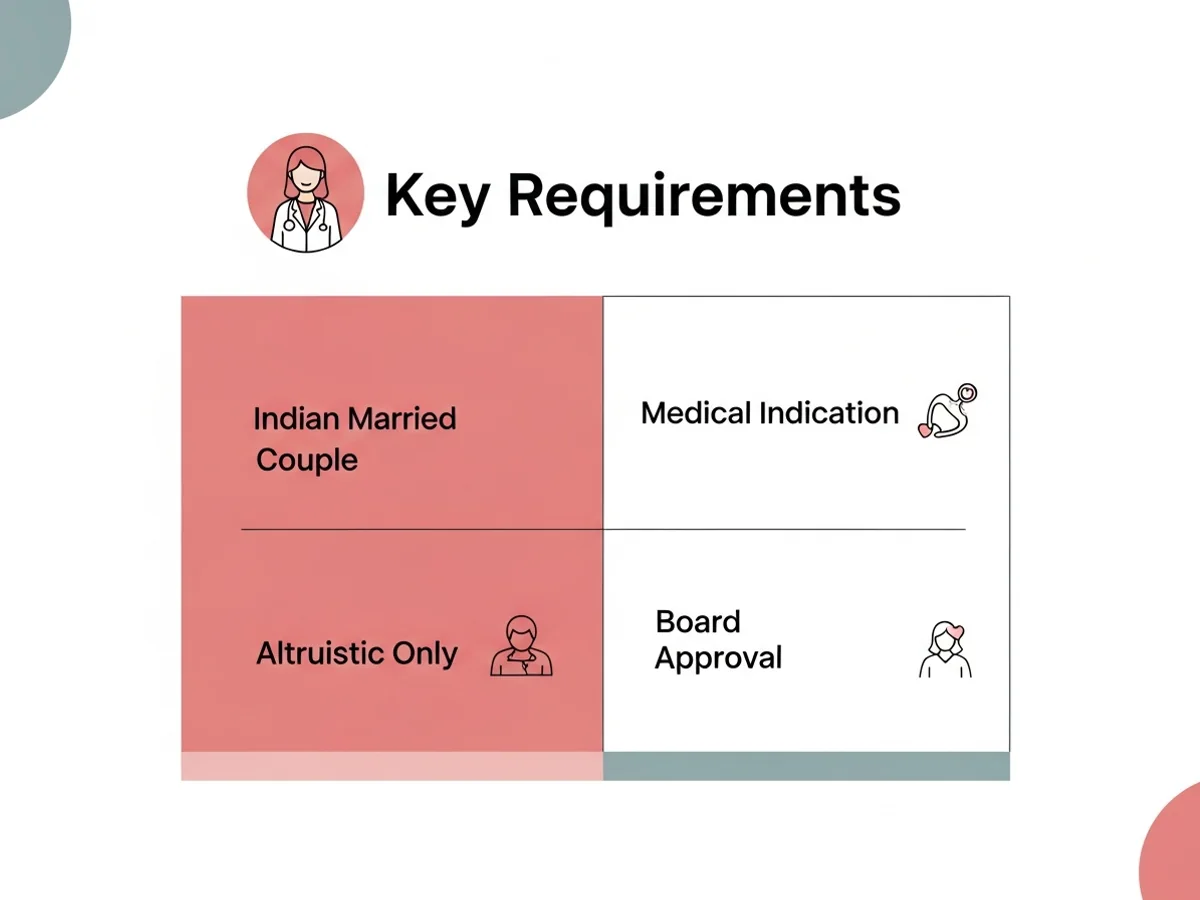
Surrogacy is one of the most legally and emotionally complex paths in reproductive medicine. Our practice operates strictly within ICMR and the 2021 Act framework — only altruistic surrogacy is supported, only Indian married couples or eligible single women as defined by law are eligible, commercial surrogacy is not offered, and every case requires medical eligibility certification and District Medical Board approval. Many couples who initially ask about surrogacy turn out to have alternative options (IVF with their own gametes, donor egg IVF, or hysteroscopic correction of an apparent uterine problem). Dr. Rukkayal’s role is to evaluate whether surrogacy is genuinely indicated, walk you through the regulatory pathway with realistic timelines, and coordinate the IVF side of the process. The legal documentation, surrogate identification, and registration steps must be handled with the appropriate legal counsel and registered surrogacy clinic in accordance with the law.
3000+
Happy Couples
12+
Years Experience
5 ★
Google Rating
1353+
Google Reviews
Situations Where Surrogacy Is Often Discussed
You should see a specialist if you experience:
- Repeated unsuccessful embryo transfers despite good-quality embryos
- Hysterectomy performed for cancer, severe bleeding, or rupture
- Congenital uterine absence (MRKH syndrome)
- Cardiac, renal, or other systemic disease where pregnancy is medically risky
- Severe Asherman syndrome with no functional endometrium remaining
Understanding Surrogacy Under Indian Law
Under the Surrogacy (Regulation) Act, 2021, only gestational surrogacy is permitted — meaning the surrogate has no genetic connection to the baby. The embryo is created via IVF using the intending couple’s gametes (or, in defined exceptional circumstances, donor gametes as permitted by law) and transferred to the surrogate’s uterus. Only altruistic surrogacy is allowed: the surrogate may receive medical expenses and insurance, but no commercial payment. Eligibility is restricted to legally married Indian couples (with specific age windows) who have a medical indication certified by a District Medical Board, as well as eligible single women as defined under the Act. Same-sex couples, unmarried couples, and foreign nationals are currently not eligible. Strict registration of surrogacy clinics and ART banks is mandatory. Anyone considering surrogacy should expect a detailed legal and medical eligibility process — not an immediate clinical start.
Medical Indications That May Qualify
How the Process Works
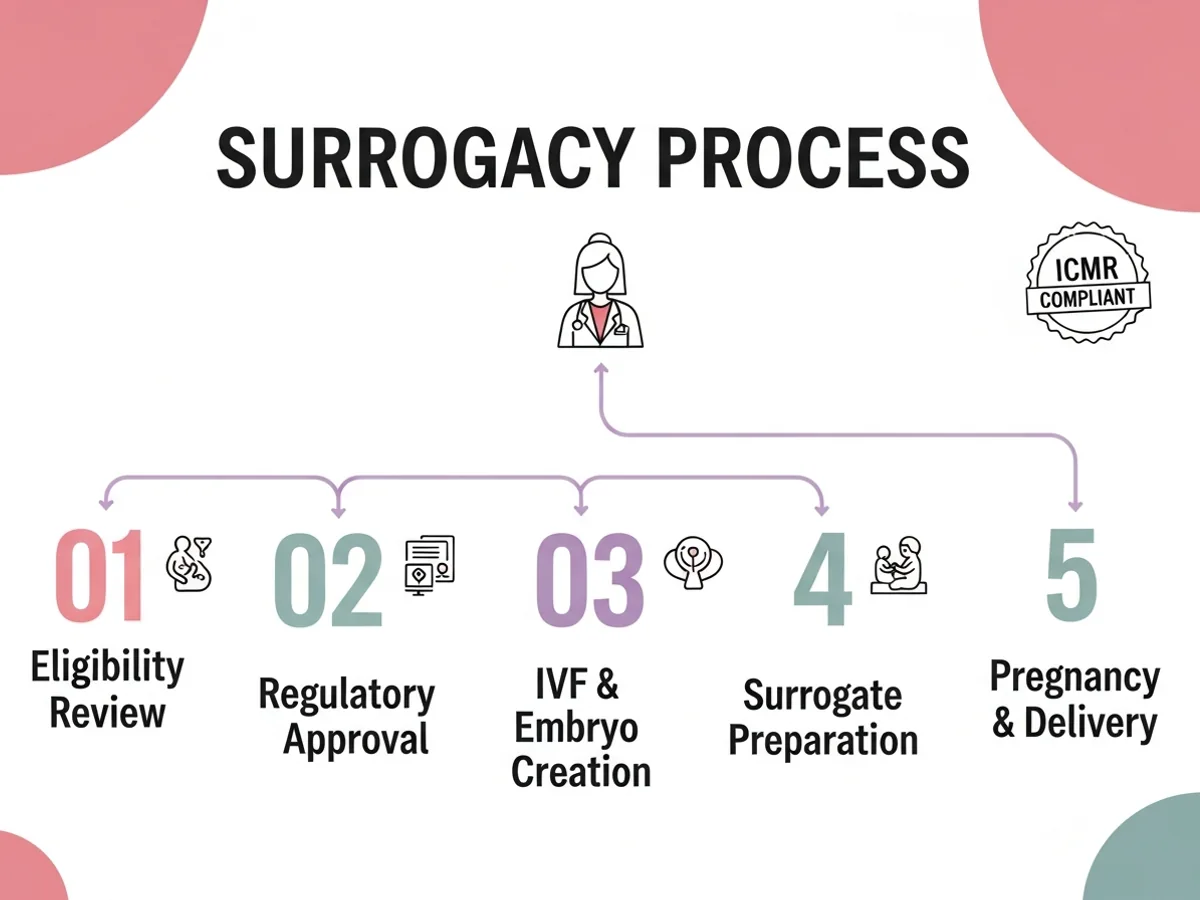
Eligibility Assessment
A detailed medical review, hormone and imaging workup, and confirmation of whether surrogacy is medically indicated under the Surrogacy (Regulation) Act, 2021. Many couples are first re-evaluated to see if alternative treatments are still feasible.
Genetic Material Preparation
IVF stimulation of the intending mother (or use of permitted donor gametes per the Act) to produce embryos, which are vitrified for use in the surrogate’s cycle.
Surrogate Medical Workup
The surrogate undergoes the medical fitness assessment defined by law and ICMR guidelines — uterine evaluation, blood tests, infection screening, and psychological assessment.
Legal & Regulatory Documentation
Eligibility certification, District Medical Board approval, surrogate consent, and registration with appropriate authorities. These steps are mandatory before any embryo transfer is performed.
Embryo Transfer & Antenatal Care
A hormonally prepared frozen embryo transfer is performed once all regulatory clearances are in place. Antenatal care of the surrogate is coordinated according to standard high-risk pregnancy protocols.
Why Choose Dr. Rukkayal?
- Strict ICMR and Surrogacy (Regulation) Act, 2021 compliance — no shortcuts, no commercial surrogacy.
- Honest evaluation of whether surrogacy is genuinely indicated for your situation.
- Detailed counselling on legal eligibility, realistic timelines, and emotional considerations.
- IVF stimulation and embryo creation handled by Dr. Rukkayal personally, with direct lab involvement.
- Coordination with registered surrogacy clinics and legal counsel for the regulatory steps.
- MRCOG (UK) and FRM (Germany) training applied to a complex, multi-stakeholder process.
- Transparent estimates with no hidden costs.
Your Treatment Journey
Counselling & Medical Review
A detailed discussion to understand your history and confirm whether surrogacy is medically indicated. Alternative options (re-do IVF, uterine surgery, donor pathways) are explored where appropriate.
Eligibility & Regulatory Pathway
Required documentation under the Surrogacy (Regulation) Act, 2021 — eligibility certification, District Medical Board approval, and registration steps — is initiated with legal support.
IVF Cycle & Embryo Creation
IVF stimulation, egg retrieval, fertilisation, embryo culture, and vitrification of resulting embryos under Dr. Rukkayal’s direct oversight.
Surrogate Preparation & Transfer
Once all clearances are in place, the surrogate’s uterus is prepared with hormonal support and a single embryo transfer is performed in a controlled frozen embryo transfer cycle.
Antenatal Care & Delivery
Pregnancy monitoring of the surrogate as a high-risk pregnancy, coordinated with the registered surrogacy clinic. Delivery planning follows standard obstetric protocols.

Have Questions About Your Treatment?
Book a consultation with Dr. Rukkayal Fathima to understand your options and next steps.
Frequently Asked Questions
Only altruistic gestational surrogacy is legal in India, under the Surrogacy (Regulation) Act, 2021 and ICMR guidelines. Commercial surrogacy is prohibited. Eligibility is restricted to defined groups of Indian intending parents who have a certified medical indication.
Current law restricts surrogacy to specific categories of Indian citizens. Foreign nationals and most NRI categories are not eligible under the Act. Anyone exploring cross-border surrogacy must obtain dedicated legal advice in their home country and in India.
From first consultation to delivery, the process typically takes 12 to 18 months. Regulatory and documentation steps alone can take several months and are mandatory before any embryo transfer.
Under current Indian law the surrogate must meet defined eligibility criteria. Specific selection or matching is handled by registered surrogacy clinics in accordance with regulations, not by individual choice in the way some other countries permit.
In standard gestational surrogacy, embryos are created using the intending couple’s own eggs and sperm via IVF, so the baby is genetically theirs. The surrogate has no genetic connection. In specific exceptional circumstances where donor gametes are required, this is discussed in detail and must comply with the Act.
Costs vary widely depending on the IVF cycle, medical workup, surrogate-related medical and insurance expenses (which by law must be reimbursement-based, not commercial), legal fees, and antenatal care. A transparent itemised estimate is shared during counselling.
Surrogacy is reserved for clearly defined medical situations. Many couples who think they need surrogacy actually have other workable options. The first step is an honest medical review to confirm whether surrogacy is genuinely indicated.
Related Specialties
IVF Treatment
IVF is the foundation of every gestational surrogacy cycle.
Donor Egg IVF
Donor egg IVF may be combined with surrogacy in specific exceptional circumstances.
Frozen Embryo Transfer
Surrogacy uses FET cycles to transfer embryos created during the intending mother’s IVF.
Recurrent Miscarriage
Some women with severe recurrent loss and confirmed uterine factor may eventually consider surrogacy.
Related Articles
Donor Egg IVF: Is It Right For You?
Comprehensive guide to donor egg IVF in Chennai. Understand the process, success rates, and costs. Consult Dr. Rukkayal Fathima.
12 min read
IVF Failure: Common Reasons & Next Steps
Understand common IVF failure reasons in Chennai. Learn about causes, investigations, and next steps with Dr. Rukkayal Fathima.
9 min read
Recurrent Miscarriage: Causes & Care
Repeated pregnancy loss has causes that can often be found and treated. Dr. Rukkayal explains diagnosis and treatment options in Chennai.
8 min read
Surrogacy Rules & Laws
Understanding surrogacy rules & regulations in India 2024. Dr. Rukkayal Fathima, Chennai, explains eligibility, costs, and legal aspects.
8 min read
Ready to Get Started?
Book a consultation with Dr. Rukkayal Fathima about your treatment options
Book AppointmentBook Consultation
Consultation Booked!
Thank you for reaching out. Our team will contact you shortly to confirm your appointment.
Need urgent help? Call us