Embryo Freezing & Vitrification in Chennai
Embryo freezing and modern vitrification in Chennai by Dr. Rukkayal — preserve surplus IVF embryos at peak quality, enable freeze-all strategies, and plan future pregnancies with confidence.
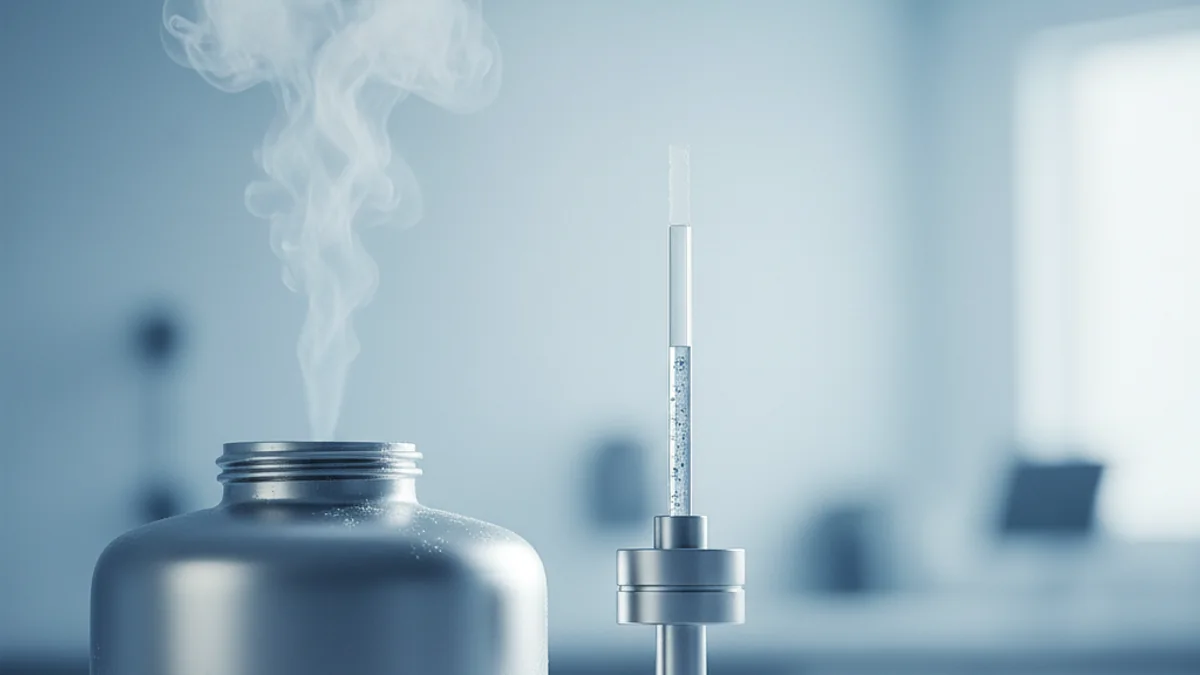
Embryo freezing — the process of preserving fertilised embryos at very low temperatures — has been transformed in the past decade by vitrification, an ultra-rapid freezing technique that virtually eliminates ice-crystal damage. For couples undergoing IVF, embryo freezing means that good-quality embryos that are not transferred in the fresh cycle are not wasted; they are preserved at their peak and can be used in a future frozen embryo transfer with success rates that match or sometimes exceed fresh transfer.
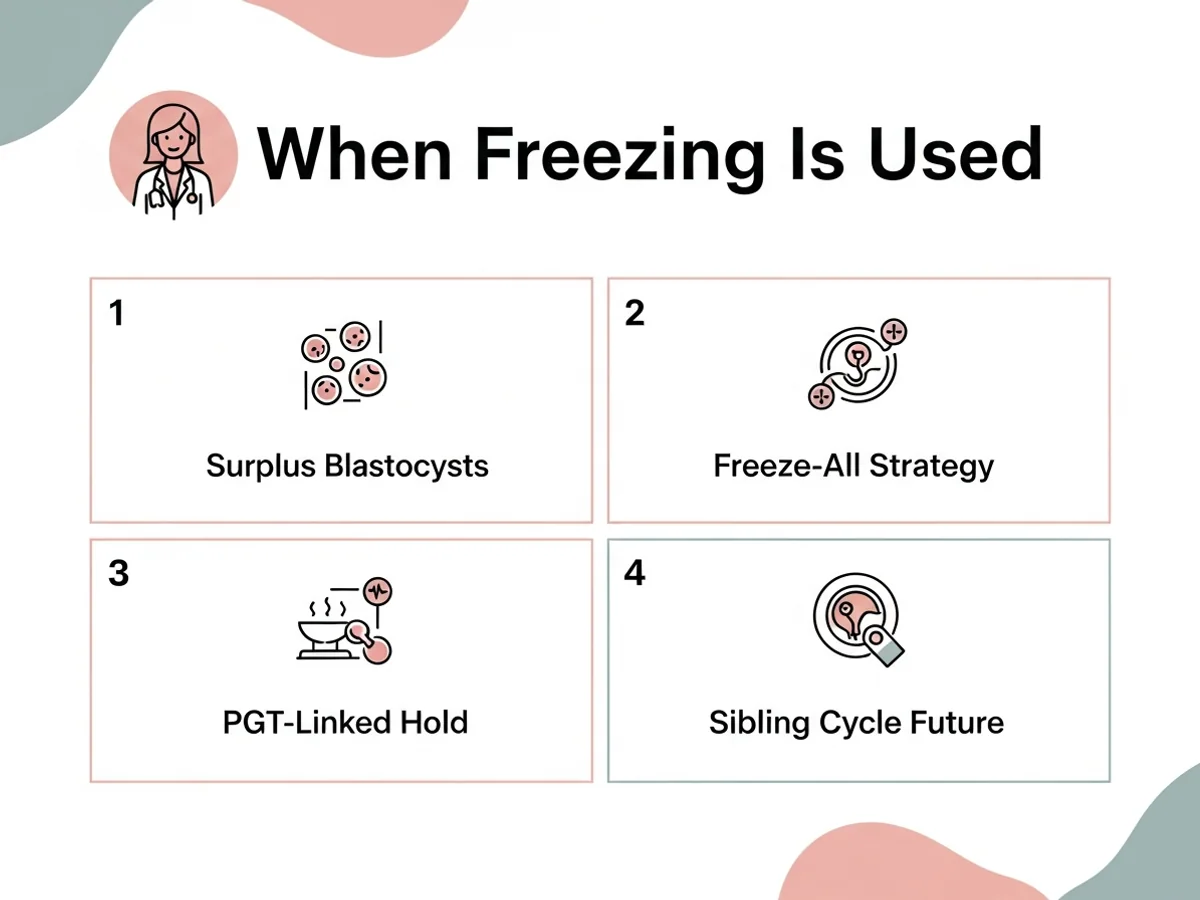
In our practice, embryo freezing is used in several distinct ways: to store surplus blastocysts after a fresh transfer, to enable freeze-all strategies when the uterine lining or hormonal environment is not ideal for fresh transfer, to support PGT-tested embryos while genetic results are awaited, and to preserve embryos for couples planning to delay further family-building. Dr. Rukkayal’s direct embryology lab involvement means freezing decisions — which embryos, at which stage, in what numbered straws — are made with the same care as the IVF cycle itself. Modern vitrification gives post-thaw survival rates above 95% in well-run labs and pregnancy rates that often outperform fresh transfer for selected patients.
>95%
Post-Thaw Survival Rate
Matches or exceeds fresh
FET Pregnancy Rate (selected)
Situations Where Freeze-All Is Often Recommended
You should see a specialist if you experience:
- High oestradiol levels or many follicles, raising OHSS risk
- Thin or poorly developed endometrial lining in the stimulation cycle
- Progesterone elevation before egg retrieval
- PGT-A planned (test results take 2–3 weeks)
- Concurrent uterine issue that needs correction before transfer
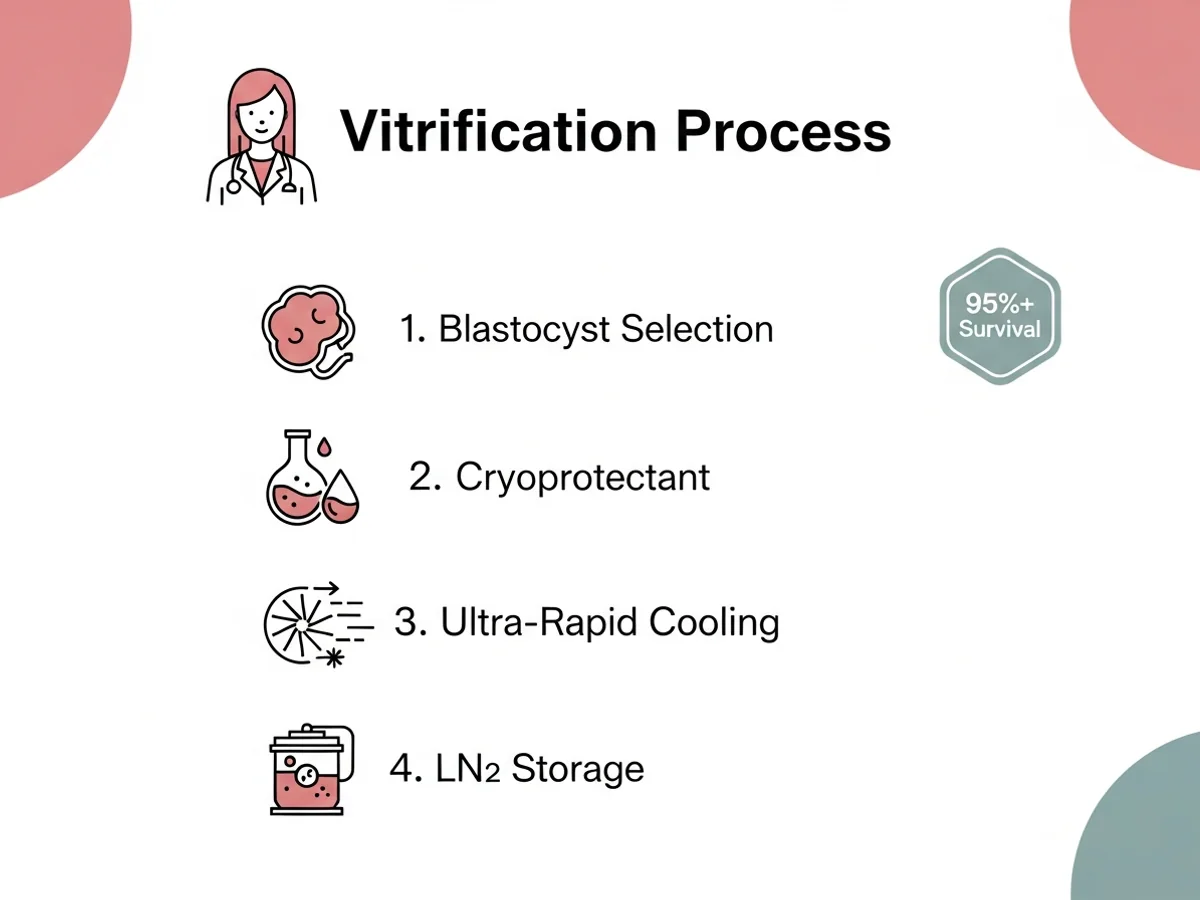
How Modern Vitrification Works
Older slow-freezing techniques cooled embryos at a controlled, gradual rate but allowed small ice crystals to form, which could damage cellular structures. Vitrification cools embryos so rapidly (more than -23,000°C per minute using liquid nitrogen) that water inside the cells transitions directly to a glass-like state with no ice-crystal formation. Cryoprotectant solutions protect the embryo during this transition. Vitrified embryos can be stored safely for many years and, when needed, are thawed rapidly with very high survival rates. Compared with the previous generation of slow freezing, vitrification has dramatically increased the per-embryo viability of frozen IVF embryos and has made freeze-all and FET strategies clinically attractive.
When Embryo Freezing Is Used
How We Freeze Embryos
Blastocyst Vitrification
Embryos that reach the blastocyst stage on day 5 or 6 are graded and vitrified at peak quality. Blastocyst-stage freezing concentrates resources on embryos most likely to implant and reduces the number stored unnecessarily.
Freeze-All Strategy
All viable embryos from a stimulation cycle are vitrified rather than transferred fresh, with embryo transfer delayed to a subsequent prepared cycle when the uterine environment is optimal. Often preferred for high responders, OHSS-risk cycles, and PGT cycles.
PGT-Linked Freezing
Embryos biopsied for preimplantation genetic testing are vitrified while genetics-lab results are awaited, then thawed and transferred in a planned cycle based on the result.
Embryo Banking Across Cycles
For women with low ovarian reserve, embryos can be collected and vitrified across two or three short cycles to build a small cohort before genetic testing or transfer.
Embryo Storage & Renewal
Vitrified embryos are stored in dedicated liquid-nitrogen tanks with documented unique identification. Annual storage renewals and clear written consent are maintained as required by ART regulations.
Why Choose Dr. Rukkayal?
- Direct embryology lab involvement — Dr. Rukkayal personally reviews which embryos go to freeze.
- Modern vitrification protocols with high post-thaw survival rates.
- Honest counselling on when freeze-all genuinely improves outcomes — and when fresh transfer is fine.
- PGT-friendly freezing workflow integrated with international genetics laboratories.
- Clear written consent, embryo storage logs, and ART (Regulation) Act, 2021 compliance.
- Transparent freezing and annual storage costs — no hidden charges.
- Coordinated planning with future frozen embryo transfer when you are ready.
Your Treatment Journey
Pre-Cycle Decision
Before stimulation, we agree on whether the plan is fresh transfer with surplus freezing, full freeze-all, or PGT-linked freezing — based on your risk profile and goals.
IVF Cycle to Blastocyst
Standard IVF stimulation, egg retrieval, fertilisation (IVF or ICSI), and culture through to blastocyst on day 5 or 6.
Embryo Grading & Selection
Each blastocyst is graded by the embryologist with Dr. Rukkayal’s direct review. Embryos suitable for freezing are identified and prepared for vitrification.
Vitrification & Storage
Embryos are vitrified individually using cryoprotectant solution and ultra-rapid cooling, then stored in clearly labelled straws inside dedicated liquid-nitrogen tanks.
Future Frozen Embryo Transfer
When you are ready, the uterus is prepared in a hormonally controlled cycle and one well-graded embryo is thawed and transferred in a planned frozen embryo transfer.

Have Questions About Your Treatment?
Book a consultation with Dr. Rukkayal Fathima to understand your options and next steps.
Frequently Asked Questions
In well-run modern labs using vitrification, frozen embryo transfer pregnancy rates match — and for selected patients, sometimes exceed — fresh transfer rates. This is because the uterine lining can be prepared more carefully in a non-stimulation cycle.
There is no clearly defined upper biological limit. Healthy live births have been reported from embryos frozen for 20+ years. In India, ART (Regulation) Act, 2021 storage rules apply and require renewed consent at defined intervals.
No. Freeze-all clearly helps in specific situations — high OHSS risk, progesterone rise before retrieval, thin lining, PGT cycles, or cycles needing uterine correction. For straightforward responders with a healthy lining, fresh transfer remains a perfectly good option.
There is typically a one-time vitrification fee included as part of the IVF cycle and a recurring annual storage charge. Clear, itemised costs and renewal terms are shared upfront.
In India, embryo creation requires sperm, and current ART rules govern who can use which gametes. Single women considering future fertility usually choose egg freezing rather than embryo freezing. We discuss this in detail during counselling.
Modern vitrification has post-thaw survival rates above 95% in well-run labs. Occasionally an embryo will not survive thawing, which is why having more than one embryo banked when possible is helpful.
Embryos are stored in clearly labelled, double-identified straws in dedicated liquid-nitrogen tanks with regular monitoring. Detailed storage logs and written consent records are maintained per ART regulations.
No. You retain decision-making authority over your embryos. Couples can later choose to transfer them, donate them under regulatory provisions, or have them respectfully discarded — with appropriate consent at the time.
Related Specialties
IVF Treatment
Embryos created during your IVF cycle are the source of every freeze-all and surplus-freezing decision.
Frozen Embryo Transfer
The companion procedure — vitrified embryos are thawed and transferred in a FET cycle.
PGT Genetic Testing
PGT-biopsied embryos are vitrified while genetics-lab results are awaited.
Fertility Preservation
Egg freezing for those preserving fertility without a current partner.
Related Articles
What To Do After Embryo Transfer
Comprehensive guide on what to do after embryo transfer in Chennai. Learn aftercare tips and increase your chances of success.
9 min read
Embryo Grading Explained
Understand embryo grading in IVF at Chennai clinics. Learn about the grading system and its impact on success.
10 min read
IVF Cycle: What to Expect
Your guide to understanding the IVF cycle in Chennai. Learn the timeline, side effects, costs, and how to prepare for your first IVF.
9 min read
Foods to Increase Endometrial Thickness — IVF Diet Guide
Thin uterine lining before IVF or FET? A fertility doctor shares the best foods, vitamins & lifestyle tips to naturally improve endometrial thickness.
2 min read
Fresh vs Frozen Embryo Transfer: Which Is Best?
Understand fresh vs frozen embryo transfer in Chennai. Learn about success rates, benefits, and which option is right for you.
10 min read
Frozen Embryo Transfer (FET) Explained
Understand frozen embryo transfer (FET) in Chennai: process, success rates, costs, and what to expect. Expert guide by Dr. Rukkayal Fathima.
14 min read
Ready to Get Started?
Book a consultation with Dr. Rukkayal Fathima about your treatment options
Book AppointmentBook Consultation
Consultation Booked!
Thank you for reaching out. Our team will contact you shortly to confirm your appointment.
Need urgent help? Call us