Ovarian PRP & Low-Reserve Treatment in Chennai
Honest, evidence-based counselling on ovarian PRP (platelet-rich plasma) and low-ovarian-reserve treatment in Chennai by Dr. Rukkayal — what the science currently supports, what it does not, and which alternatives may actually move the needle.
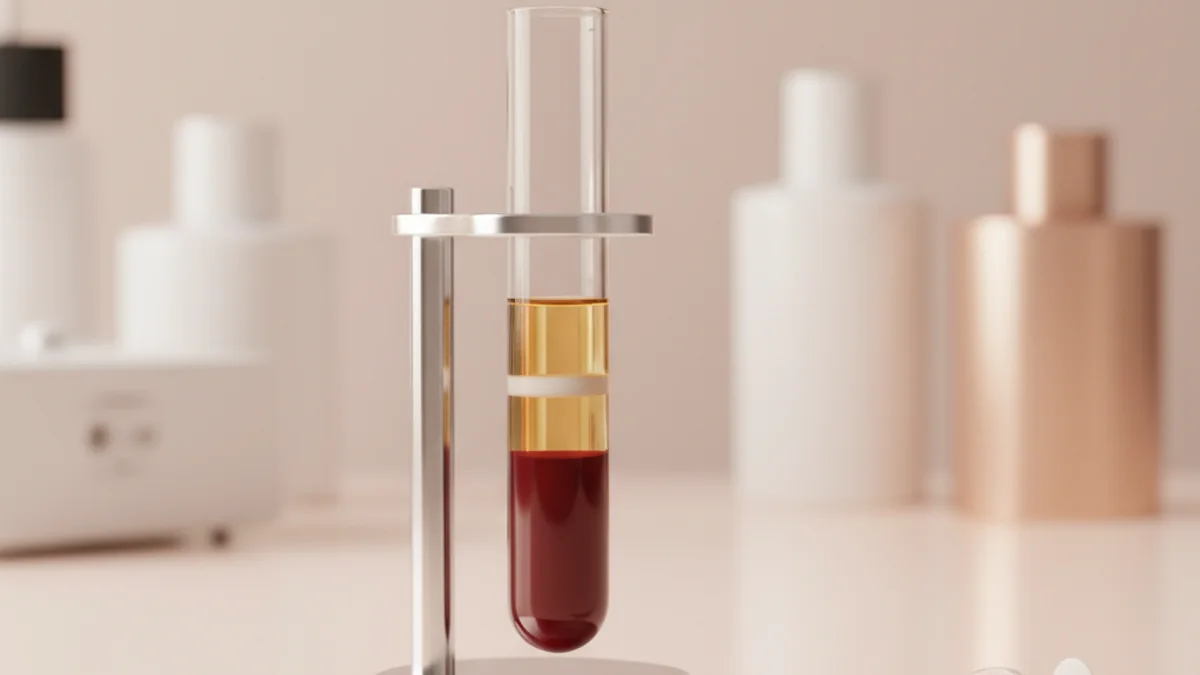
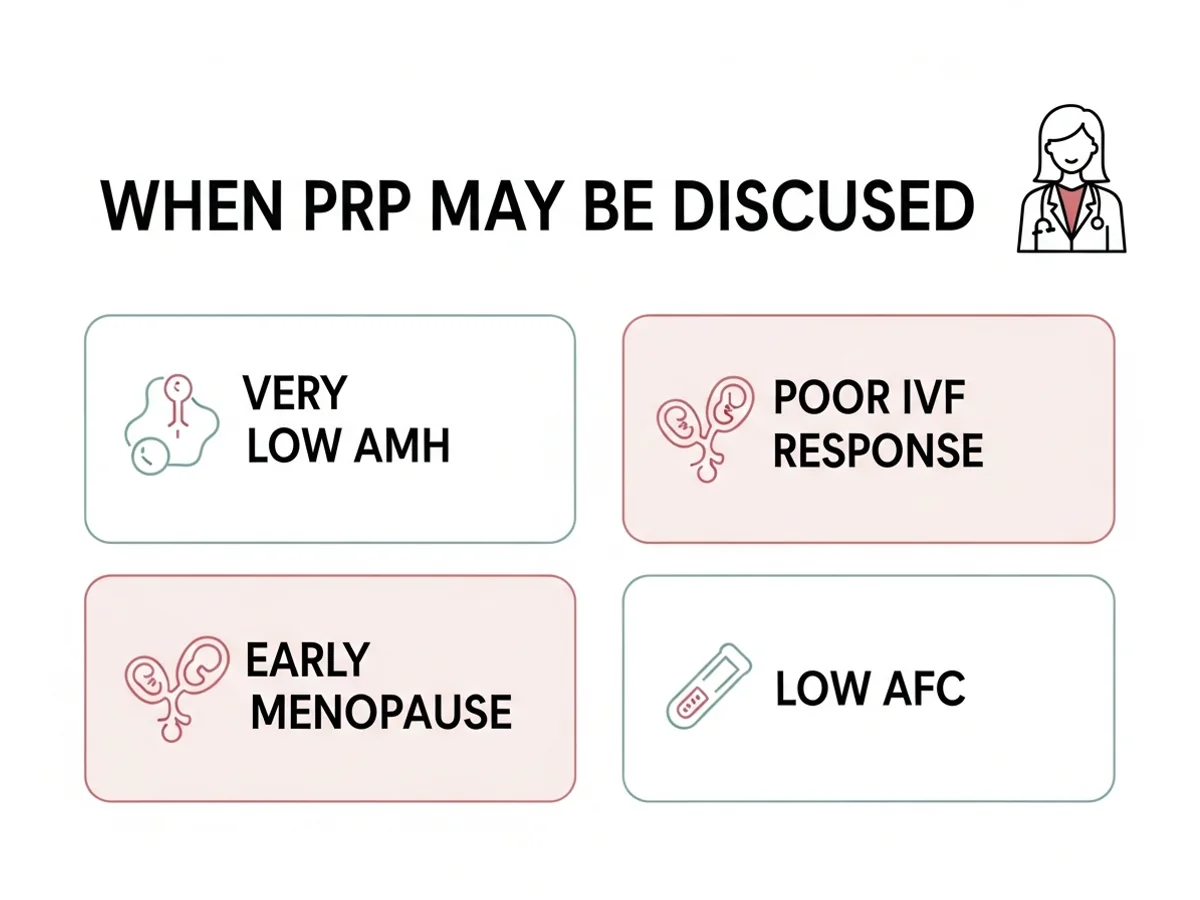
Platelet-rich plasma (PRP) injection into the ovary — sometimes marketed as "ovarian rejuvenation" — is an emerging experimental therapy aimed at women with poor ovarian reserve, very low AMH, or poor response to IVF stimulation. Some women appear to benefit, with modest improvements in follicle response or AMH; others see no measurable change. Critically, the evidence base is still small, most studies are observational rather than randomised, and PRP is not currently a standard, guideline-endorsed treatment. Dr. Rukkayal’s approach is straightforward: we explain what the data does and does not show, identify whether more proven options (mini-IVF, donor egg IVF, lifestyle and supplement optimisation) might serve you better, and only consider PRP after fully informed consent.
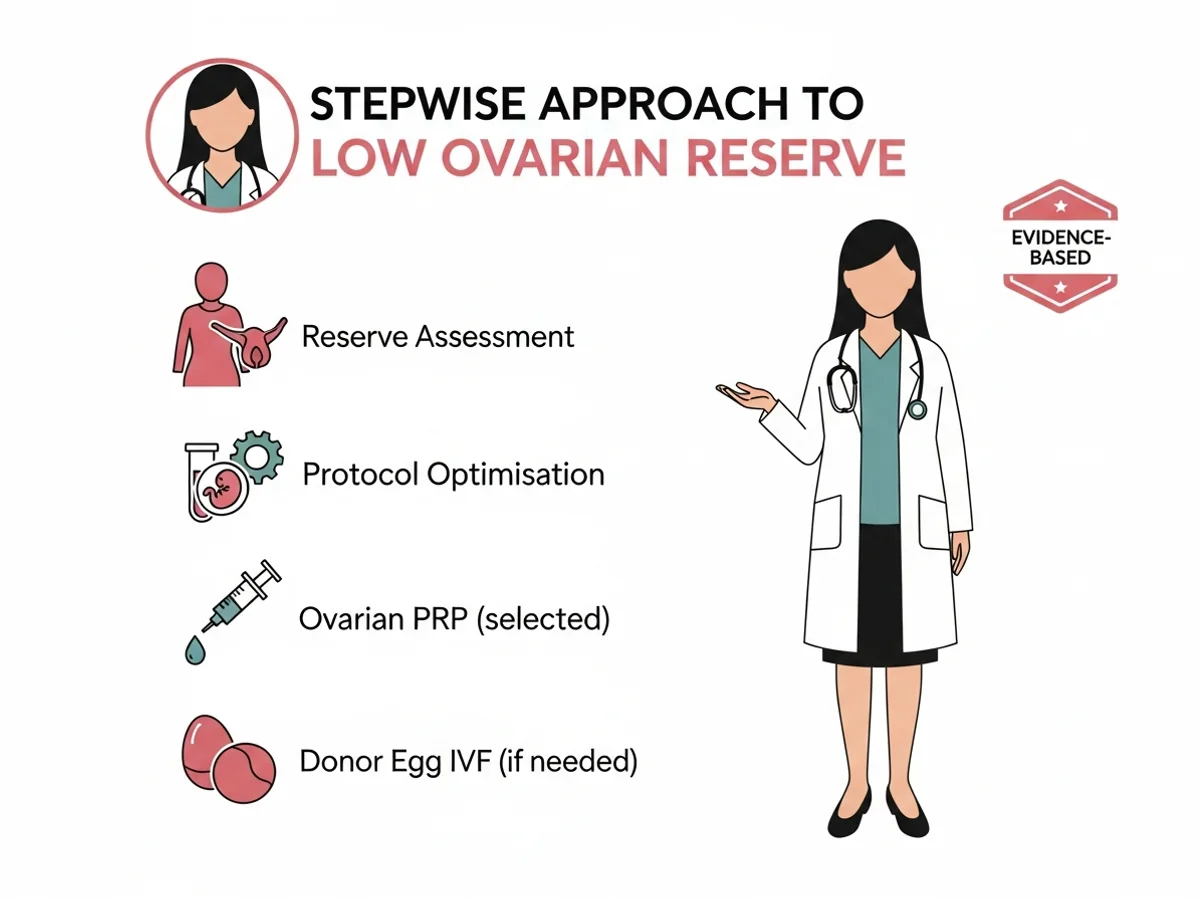
Many women arrive at our clinic after being told "your AMH is low, try PRP." Before considering ovarian PRP, we look hard at the full picture — your AMH trend, antral follicle count, response to previous stimulation, partner factors, age, and how many cycles are realistic for you. For women with very poor ovarian reserve, the highest-yield interventions are usually (a) optimising IVF stimulation with the right protocol, (b) carefully timed mini-IVF or natural-cycle IVF, (c) banking embryos across multiple cycles, and (d) honestly considering donor egg IVF when biological probability is very low. PRP can be discussed as an adjunct in carefully selected cases, but it is never sold as a guaranteed solution. Dr. Rukkayal’s FRM (Germany) and MRCOG (UK) training means decisions are grounded in international evidence, not marketing claims.
3000+
Happy Couples
12+
Years Experience
5 ★
Google Rating
1353+
Google Reviews
Warning Signs of Low Ovarian Reserve
You should see a specialist if you experience:
- AMH below 1.0 ng/mL on repeat testing
- Antral follicle count below 5–7 across both ovaries
- Cycle shortening (periods coming closer together than before)
- Poor response to standard IVF stimulation
- Family history of early menopause
- Previous ovarian surgery or chemotherapy
What Ovarian PRP Is — and What the Evidence Currently Says
PRP is prepared by drawing a small amount of the patient’s own blood, centrifuging it to concentrate platelets, and injecting that concentrate directly into the ovaries under ultrasound guidance, usually transvaginally. The hypothesis is that growth factors in platelets may stimulate dormant follicles. Some small case series and observational studies have reported short-term improvements in AMH, antral follicle count, or stimulation response in women with diminished ovarian reserve or early menopause. However, well-designed randomised trials with live-birth endpoints are still limited, results vary widely between studies, and PRP is not a recognised standard treatment in most international guidelines. It is reasonable to discuss PRP as an experimental adjunct for selected women — never as a guaranteed solution and never as a replacement for proven IVF strategies or donor egg IVF when those are more appropriate.
Situations Where PRP May Be Discussed
Our Stepwise Approach to Low Ovarian Reserve
Comprehensive Reserve Assessment
AMH, antral follicle count, FSH, oestradiol, and a careful review of any previous stimulation cycles to clarify the true picture of ovarian reserve and response pattern.
Protocol Optimisation First
In many cases the best gains come from choosing the right stimulation protocol (antagonist, mild stimulation, mini-IVF, or natural cycle IVF), not from PRP. Protocol optimisation is the first lever we use.
Embryo Banking Across Cycles
For women with low ovarian reserve, banking a few embryos over 2–3 short cycles can build a small cohort for later genetic testing or transfer — often higher-yield than a single attempt at PRP.
Ovarian PRP (Experimental Adjunct)
Transvaginal PRP injection under ultrasound guidance in carefully selected patients, only after detailed informed consent that PRP is experimental, evidence is limited, and outcomes are not guaranteed.
Lifestyle, Supplement & Comorbidity Optimisation
Vitamin D and thyroid correction, weight optimisation, smoking cessation, sleep, and selected supplements (such as CoQ10) discussed where evidence supports them — modest but real contributions over months.
Donor Egg IVF Discussion
Where biological probability is very low, honest counselling about donor egg IVF as the option with the highest realistic chance of a live birth. This is offered as information, never pressure.
Why Choose Dr. Rukkayal?
- No false promises — PRP is offered only as an experimental adjunct with full informed consent.
- FRM (Germany) and MRCOG (UK) training applied to international-standard reserve assessment.
- Stimulation protocols optimised first — many "PRP candidates" actually need a different protocol.
- Direct embryology lab involvement when banking embryos across multiple cycles.
- Honest cost transparency — you pay only for what we believe genuinely contributes to your chance.
- Donor egg IVF and other proven options discussed openly when probability favours them.
- Detailed written summary of options and probabilities so you can decide without pressure.
Your Treatment Journey
Reserve & Previous Cycle Review
A detailed look at AMH, antral follicle count, FSH, and the response in any previous IVF cycles — including a candid review of what each cycle taught us.
Options Discussion
A written summary of realistic options with estimated probabilities — protocol optimisation, embryo banking, ovarian PRP, donor egg IVF — and how they compare.
Selected Intervention
If PRP is chosen, a transvaginal ovarian PRP procedure under ultrasound guidance, usually as a day-care procedure under short sedation. Otherwise, a tailored stimulation cycle or banking plan is initiated.
Response Monitoring
AMH, antral follicle count, and clinical response are tracked over the following weeks to months to objectively assess whether the intervention helped.
Course Correction
Honest reassessment based on response — sometimes one more cycle, sometimes a switch to donor egg IVF, sometimes pausing treatment. Decisions stay yours, informed by clear data.

Have Questions About Your Treatment?
Book a consultation with Dr. Rukkayal Fathima to understand your options and next steps.
Frequently Asked Questions
The honest answer is: sometimes, modestly, in some women, on some short-term parameters. There is no high-quality randomised evidence yet that PRP reliably improves live-birth rates for women with poor ovarian reserve. We treat it as experimental and never as a guaranteed treatment.
A small number of case reports describe temporary return of cycles or follicle activity after PRP in women with premature ovarian insufficiency, but these are exceptions rather than expectations. Anyone offering guaranteed reversal of menopause should be approached with great caution.
No. For women with very low ovarian reserve who are emotionally ready, donor egg IVF remains the option with the highest realistic chance of a live birth. PRP may modestly help some women, but it does not replace donor egg IVF when the probability data points that way.
PRP uses the patient’s own blood, so allergic and infectious risks are very low. The procedure-related risks (bleeding, infection, ovarian discomfort) are similar to those of egg retrieval and are uncommon when performed carefully under ultrasound guidance.
Most protocols allow IVF stimulation 6–12 weeks after PRP to allow time for any potential follicle response. The exact timing is individualised based on follow-up AMH and antral follicle count.
PRP cost is separate from IVF cycle costs and varies based on the number of injections planned. We share a clear estimate before any procedure is scheduled. Importantly, we discuss whether PRP is genuinely the best use of your fertility budget compared with protocol optimisation or donor egg IVF.
AMH itself is largely set by your ovarian reserve and does not dramatically change with lifestyle. However, optimising thyroid, vitamin D, weight, sleep, smoking, and certain supplements like CoQ10 can modestly support egg quality and stimulation response over months.
Related Specialties
Fertility Preservation
Egg freezing for women still ahead of the age curve.
Donor Egg IVF
ICMR-compliant donor egg program for women with very poor ovarian reserve.
IVF Treatment
Optimised IVF stimulation protocols — often the highest-yield intervention.
Ovulation Induction
Medication-supported follicle development for selected low-reserve patients.
Related Articles
Anti-Müllerian Hormone (AMH) Test: Complete Guide
Comprehensive guide to the AMH test in Chennai: what it measures, results, and implications for fertility. Expert advice from Dr. Rukkayal Fathima.
8 min read
Improve Egg Quality for Fertility
Learn how to improve egg quality in Chennai for better fertility outcomes. Expert advice from Dr. Rukkayal Fathima.
10 min read
How to Increase AMH Level Naturally
How to increase AMH levels naturally — Chennai fertility specialist Dr. Rukkayal explains evidence-based diet, supplements & lifestyle changes that help.
8 min read
Age-Related Fertility Decline: Causes, Tests & Treatment Options
How age affects fertility in women and men. Dr. Rukkayal explains ovarian reserve, egg quality, AMH testing, and treatment options in Chennai.
11 min read
AMH Levels Explained
Understand AMH levels & fertility. Expert insights from Dr. Rukkayal Fathima, Chennai's leading fertility specialist.
7 min read
Donor Egg IVF: Is It Right For You?
Comprehensive guide to donor egg IVF in Chennai. Understand the process, success rates, and costs. Consult Dr. Rukkayal Fathima.
12 min read
Low Ovarian Reserve Treatment Options
Low ovarian reserve does not mean the end of the road. Dr. Rukkayal explains the tests, treatment options, and IVF protocols available in Chennai.
12 min read
Ready to Get Started?
Book a consultation with Dr. Rukkayal Fathima about your treatment options
Book AppointmentBook Consultation
Consultation Booked!
Thank you for reaching out. Our team will contact you shortly to confirm your appointment.
Need urgent help? Call us