IUI Treatment Process Explained

This article is part of our guide on IUI Treatment in Chennai — see the full treatment overview, success rates, and costs.
Are you exploring IUI treatment in Chennai to help you conceive? Intrauterine insemination (IUI) is a fertility treatment that involves placing sperm directly into a woman's uterus to increase the chances of fertilisation. This blog post will guide you through the IUI treatment process step-by-step, discuss success rates in Chennai, costs involved, and help you understand if IUI is the right option for you.
What Is IUI and How Does It Work?
Intrauterine insemination (IUI), also known as artificial insemination, is a fertility treatment designed to increase the number of sperm that reach the egg, thereby improving the chances of fertilisation. In a natural conception, sperm must travel from the vagina through the cervix, into the uterus, and finally to the fallopian tubes where fertilisation occurs. IUI bypasses the cervix, placing a concentrated amount of healthy sperm directly into the uterus close to the time of ovulation.
The IUI procedure typically involves these key steps:
- Ovarian Stimulation (Optional): Some women may take fertility medications to stimulate the ovaries to produce one or more mature eggs. This is often recommended for women with irregular ovulation or unexplained infertility. Medications like clomiphene citrate or letrozole are commonly used, and in some cases, gonadotropins may be prescribed.
- Follicular Monitoring: If ovarian stimulation is used, the woman will undergo regular monitoring via ultrasound to track the development of follicles (sacs containing the eggs). Blood tests may also be performed to monitor hormone levels.
- Sperm Preparation: On the day of the IUI procedure, a semen sample is collected from the male partner or obtained from a sperm donor. The sample is then "washed" in the laboratory to separate the healthy, motile sperm from the seminal fluid and non-motile sperm. This process concentrates the sperm and removes substances that can cause uterine cramping.
- Insemination: The prepared sperm is then gently inserted into the woman's uterus using a thin, flexible catheter. The procedure is usually quick and relatively painless, similar to a Pap smear.
- Post-IUI Support: After the insemination, the woman may be advised to rest for a short period. Progesterone support may also be prescribed to help support the uterine lining and improve the chances of implantation. A pregnancy test is typically performed about two weeks after the IUI to determine if the treatment was successful.
IUI is often recommended as a less invasive and less expensive option compared to IVF, particularly for couples with certain types of infertility. As a fertility specialist practising across multiple locations in Chennai, I often see patients benefit from IUI as a first-line treatment before considering more advanced interventions.
Who Needs IUI?
IUI is a suitable treatment option for various infertility issues. In my clinical experience, IUI is most effective in the following situations:
- Unexplained Infertility: When the cause of infertility cannot be determined through standard fertility testing, IUI can increase the chances of conception.
- Mild Male Factor Infertility: IUI can help overcome mild issues with sperm count, sperm motility (movement), or sperm morphology (shape). By concentrating the sperm and placing it directly into the uterus, IUI increases the likelihood of fertilisation.
- Cervical Factor Infertility: Some women have cervical mucus that is hostile to sperm, preventing it from reaching the egg. IUI bypasses the cervix, delivering the sperm directly into the uterus.
- Ovulatory Dysfunction: Women with irregular ovulation or who do not ovulate may benefit from IUI combined with ovarian stimulation. Medications can help regulate ovulation and increase the number of eggs available for fertilisation.
- Single Women or Same-Sex Couples: IUI with donor sperm is an option for single women or same-sex couples who wish to conceive.
- Ejaculation Dysfunction: In cases where the male partner has difficulty with ejaculation, IUI can be performed using sperm collected through alternative methods.
It's important to note that IUI may not be the best option for all couples. Factors such as advanced maternal age, severe male factor infertility, blocked fallopian tubes, or endometriosis may warrant more advanced treatments like IVF. In my practice, I conduct a thorough evaluation of each patient to determine the most appropriate and effective treatment plan.
IUI Step-by-Step Process
The IUI procedure is a relatively simple and straightforward process, but understanding each step can help ease any anxiety and prepare you for what to expect. Here’s a detailed breakdown of the IUI treatment process:
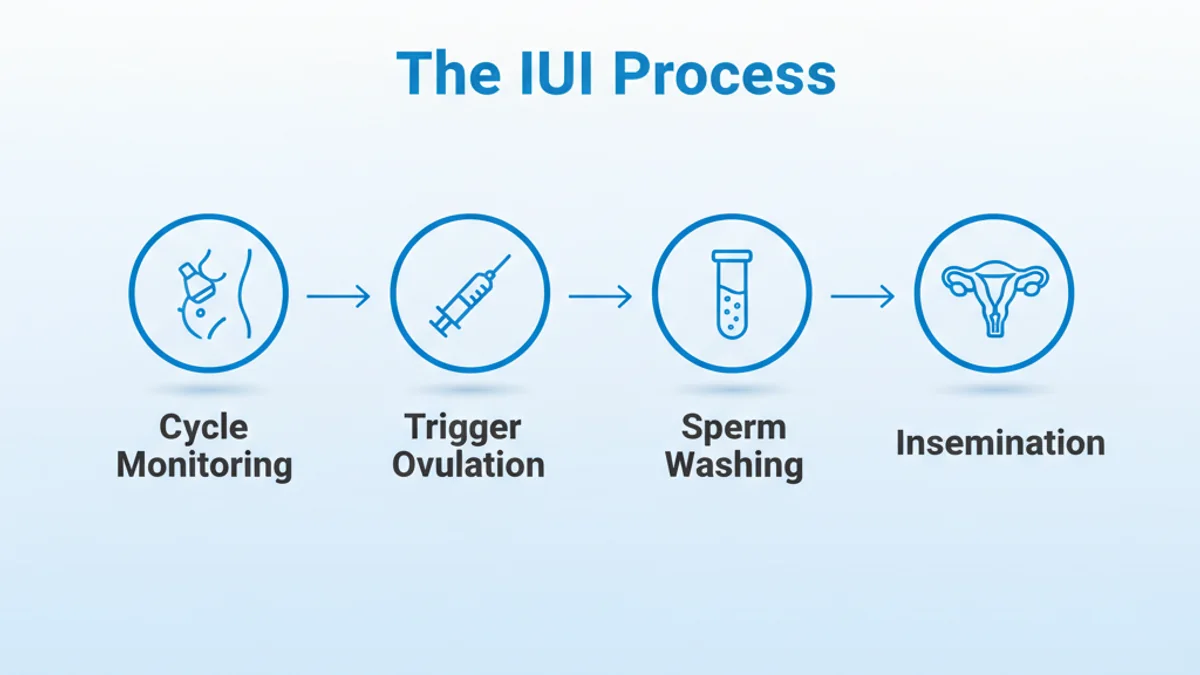
- Initial Consultation and Fertility Evaluation: The first step involves a consultation with a fertility specialist. During this visit, your medical history will be reviewed, and a physical examination may be performed. Fertility testing, including blood tests to assess hormone levels, ultrasound to evaluate the uterus and ovaries, and semen analysis for the male partner, will be conducted to determine the underlying cause of infertility.
- Ovarian Stimulation (Optional): If necessary, ovarian stimulation is initiated to encourage the development of one or more mature eggs. This typically involves taking oral medications like clomiphene citrate or letrozole, or injectable gonadotropins. The choice of medication will depend on your individual situation and response to treatment.
- Follicular Monitoring: If ovarian stimulation is used, you will need to attend regular monitoring appointments, usually every 2-3 days. These appointments involve transvaginal ultrasounds to track the growth and development of follicles. Blood tests may also be performed to monitor oestrogen levels.
- Ovulation Trigger: Once the follicles reach an optimal size (typically around 18-20 mm), you will be given an injection of human chorionic gonadotropin (hCG) or a GnRH agonist to trigger ovulation. This injection helps the eggs mature fully and prepares them for fertilisation.
- Sperm Preparation: On the day of the IUI procedure, the male partner will provide a semen sample. The sample is then processed in the laboratory to separate the healthy, motile sperm from the seminal fluid and non-motile sperm. This process, known as sperm washing, improves the quality of the sperm and reduces the risk of uterine cramping.
- Insemination: The IUI procedure is typically performed 24-36 hours after the ovulation trigger. You will lie on an examination table, and a speculum will be inserted into the vagina to visualise the cervix. A thin, flexible catheter containing the prepared sperm is then gently inserted through the cervix and into the uterus. The sperm is slowly released into the uterus, and the catheter is removed. The procedure usually takes only a few minutes and is generally painless.
- Post-IUI Instructions: After the IUI procedure, you may be advised to rest for a short period. You can usually resume normal activities immediately. Progesterone supplementation may be prescribed to support the uterine lining and improve the chances of implantation.
- Pregnancy Test: A pregnancy test is typically performed about two weeks after the IUI procedure to determine if the treatment was successful.
Success Rates of IUI
IUI success rates vary depending on several factors, including the woman's age, the cause of infertility, the quality of the sperm, and whether fertility medications were used. It's important to have realistic expectations and understand that IUI success rates are generally lower than those of IVF.
Here’s a general overview of IUI success rates:
- Age: Women under 35 typically have higher IUI success rates compared to older women. As a woman's age increases, the quality and quantity of her eggs decline, which can affect the chances of conception. A large-scale study analyzing over 10,000 insemination cycles found that women under 35 achieved cumulative live birth rates of 27.62% when using partner sperm. Success rates decline with age, with women over 40 having significantly lower success rates.
- Cause of Infertility: The underlying cause of infertility also plays a significant role in IUI success rates. Women with unexplained infertility or mild male factor infertility tend to have better outcomes compared to those with more severe infertility issues.
- Use of Fertility Medications: Ovarian stimulation with fertility medications can increase the chances of IUI success, particularly for women with ovulatory dysfunction. However, it also increases the risk of multiple pregnancies.
- Number of IUI Cycles: The cumulative success rate of IUI increases with each cycle, up to a certain point. Most successful IUI pregnancies occur within the first 3-4 cycles. If IUI is unsuccessful after several cycles, more advanced treatments like IVF may be recommended.
IUI Success Rates by Age Group:
| Age Group | Success Rate per Cycle | Cumulative Success Rate (3-4 Cycles) |
|---|---|---|
| Under 35 | 10-20% | 30-60% |
| 35-40 | 8-15% | 25-45% |
| Over 40 | 2-5% | 5-15% |
In my practice in Chennai, I strive to provide patients with realistic expectations and personalised treatment plans to maximise their chances of IUI success.
IUI Cost in Chennai
The cost of IUI treatment in Chennai can vary depending on several factors, including the clinic you choose, the medications required, and the number of monitoring appointments needed. It's essential to have a clear understanding of the costs involved before starting treatment.
Here's a general breakdown of the costs associated with IUI treatment in Chennai:
- Initial Consultation: The initial consultation fee typically ranges from ₹500 to ₹2,000.
- Fertility Testing: Fertility testing, including blood tests and ultrasound, can cost between ₹3,000 and ₹8,000.
- Semen Analysis: Semen analysis for the male partner usually costs between ₹500 and ₹1,500.
- Fertility Medications: The cost of fertility medications can vary widely depending on the type and dosage required. Oral medications like clomiphene citrate or letrozole may cost between ₹500 and ₹2,000 per cycle, while injectable gonadotropins can cost between ₹5,000 and ₹20,000 per cycle.
- Monitoring Appointments: Monitoring appointments, including ultrasound and blood tests, can cost between ₹1,000 and ₹3,000 per visit.
- Sperm Preparation: Sperm preparation for IUI typically costs between ₹2,000 and ₹5,000 per cycle.
- IUI Procedure: The IUI procedure itself usually costs between ₹3,000 and ₹7,000.
Overall, the total cost of IUI treatment in Chennai can range from ₹5,000 to ₹20,000 per cycle, depending on the individual's needs and treatment plan. Some clinics may offer package deals that include multiple IUI cycles or other services. It's always a good idea to inquire about the total cost of treatment and any available financing options before starting IUI.
Risks and Side Effects
IUI is generally a safe procedure, but it's essential to be aware of the potential risks and side effects. Most patients experience only mild and temporary discomfort.
The most common risks and side effects of IUI include:
- Mild Cramping: Some women may experience mild cramping or discomfort during or after the IUI procedure. This is usually due to the insertion of the catheter into the uterus and typically resolves within a few hours.
- Spotting: Light spotting or bleeding may occur after the IUI procedure. This is usually caused by irritation of the cervix and is not a cause for concern.
- Infection: There is a small risk of infection associated with IUI, as with any medical procedure. However, the risk is minimal, especially when the procedure is performed by a trained and experienced fertility specialist.
- Multiple Pregnancy: Ovarian stimulation with fertility medications can increase the risk of multiple pregnancies (twins, triplets, or more). Multiple pregnancies carry a higher risk of complications for both the mother and the babies, such as premature birth, low birth weight, and gestational diabetes. In a network meta-analysis, IUI with gonadotropins ranked highest for live birth/ongoing pregnancy rates, but also carried a higher risk of multiple pregnancies. Adherence to strict cancellation criteria can mitigate the risk of multiple pregnancies without compromising effectiveness.
- Ovarian Hyperstimulation Syndrome (OHSS): In rare cases, ovarian stimulation can lead to OHSS, a condition in which the ovaries become enlarged and fluid accumulates in the abdomen. OHSS can cause symptoms such as abdominal pain, nausea, vomiting, and weight gain. Severe cases may require hospitalisation.
Before starting IUI treatment, I always discuss the potential risks and side effects with my patients and take steps to minimise them. Careful monitoring during ovarian stimulation and adherence to recommended guidelines can help reduce the risk of complications.
What to Expect After IUI
After undergoing IUI, it's normal to feel anxious and eager to know if the treatment was successful. Here's what you can expect in the days and weeks following the procedure:
- Immediate Post-Procedure: You may be advised to rest for a short period after the IUI procedure. However, you can usually resume normal activities immediately.
- Symptoms: Some women may experience mild cramping, spotting, or bloating in the days following IUI. These symptoms are usually temporary and not a cause for concern.
- Medications: If you were prescribed progesterone supplementation, it's important to take it as directed. Progesterone helps support the uterine lining and improve the chances of implantation.
- Lifestyle: Continue to maintain a healthy lifestyle by eating a balanced diet, getting regular exercise, and avoiding smoking and excessive alcohol consumption.
- Pregnancy Test: A pregnancy test is typically performed about two weeks after the IUI procedure. It's important to wait until the recommended time to ensure accurate results. Testing too early can lead to false negatives.
- Follow-Up: If the pregnancy test is positive, you will need to schedule a follow-up appointment with your fertility specialist to confirm the pregnancy and monitor its progress. If the pregnancy test is negative, your doctor will discuss your options for future treatment cycles.
When to Seek Professional Help
While this blog post provides general information about IUI treatment, it's essential to seek personalised guidance from a fertility specialist. If you are experiencing difficulty conceiving or have questions about our IUI treatment in Chennai, book a consultation with Dr. Rukkayal Fathima. With over 12 years of experience and a commitment to providing compassionate and effective care, I can help you explore your fertility options and develop a treatment plan that is right for you.

Dr. Rukkayal Fathima
MBBS, MS (OBG), MRCOG (UK), FRM (Kiel University)
Fertility Specialist, Obstetrician, Gynecologist & Laparoscopic Surgeon
Dr. Rukkayal Fathima is one of India's leading Gynaecologists and the best fertility doctor in Chennai. She has 12+ years of experience and treated 3000+ patients. She specialises in IVF, ICSI, TESA/Micro TESE, IUI, Early Pregnancy Scan, Menopause advice, and Gynaecological surgeries. She is a Co-founder & Director of Yaal Fertility and Women's Centre, the Best Fertility Center in Chennai.
Have Questions About IUI Treatment?
Every situation is unique. Dr. Rukkayal Fathima provides personalised, evidence-based guidance across multiple locations in Chennai.
Frequently Asked Questions
Intrauterine insemination (IUI) is a fertility treatment where sperm is directly placed into a woman's uterus to increase the chances of fertilisation. By bypassing the cervix, IUI delivers a higher concentration of motile sperm closer to the egg, particularly useful for mild male factor infertility or unexplained infertility.
IUI success rates vary depending on factors such as age, underlying cause of infertility, and sperm quality. In Chennai, the success rate per IUI cycle can range from 10-20% for women under 35. Cumulative success rates over multiple cycles may reach up to 40-50%, but decline with increasing age.
The cost of IUI treatment in Chennai typically ranges from ₹5,000 to ₹20,000 per cycle. This includes the cost of sperm preparation, insemination procedure, and monitoring. The cost of fertility medications, if needed for ovarian stimulation, will be additional.
The IUI treatment process typically spans 2-3 weeks, including initial consultation, ovarian stimulation (if needed), follicular monitoring, ovulation induction, and the insemination procedure itself. A pregnancy test is usually performed about two weeks after the IUI to determine success.
IUI is generally a safe procedure. Potential risks include mild cramping or spotting after the procedure. Ovarian stimulation with fertility medications can increase the risk of multiple pregnancies. There is also a small risk of infection. These risks are carefully managed during the treatment process.
Preparation for IUI involves a consultation with a fertility specialist, fertility testing to assess ovarian reserve and sperm quality, and lifestyle adjustments such as maintaining a healthy weight and avoiding smoking and excessive alcohol consumption. Your doctor may also recommend specific supplements.
IUI is often recommended as a first-line treatment for couples with unexplained infertility, mild male factor infertility, or cervical factor infertility. IVF may be recommended if IUI is unsuccessful after several cycles, or in cases of severe male factor infertility, blocked fallopian tubes, or advanced maternal age.
Consult Dr. Rukkayal in Chennai
Available at 4 fertility clinic locations across Chennai. Walk-ins welcome; appointments preferred.
No. 747, Poonamallee High Road, Alagappa Nagar, Kilpauk, Chennai – 600 010
No. 149/1, Luz Church Road, Bhaskarapuram, Mylapore, Chennai – 600 004
No. 95, Plot No. 1, Velachery Main Road, Devi Karumariamman Nagar, Pallikaranai, Chennai – 600 100
Dr. Rukkayal is also a visiting consultant at Apollo Hospital, Motherhood Hospital, Cloud Nine Hospital, MGM Hospital, Metha Hospital and St. Isabel Hospital in Chennai. View all clinic locations