IVF or IUI: Which Treatment Is Right?

This article is part of our guide on IVF Treatment in Chennai — see the full treatment overview, success rates, and costs.
Are you struggling to conceive and wondering about the best path forward? Both IVF (In Vitro Fertilisation) and IUI (Intrauterine Insemination) are common fertility treatments offered in Chennai, but they differ significantly in their approach, success rates, and costs. Choosing between IVF and IUI depends on your specific fertility challenges and goals.
What Is IUI and How Does It Work?
Intrauterine Insemination (IUI) is a fertility treatment that involves placing sperm directly into a woman's uterus to facilitate fertilisation. The goal of IUI is to increase the number of sperm that reach the fallopian tubes and subsequently increase the chance of fertilisation.
The IUI process typically involves:
- Ovulation Induction: The woman may take fertility medications to stimulate the development of one or more mature eggs. Medications like clomiphene citrate or letrozole are commonly used. Follicular monitoring via ultrasound is crucial during this phase.
- Sperm Preparation: A semen sample is collected from the male partner (or a donor) and "washed." This process removes debris and poorly motile sperm, concentrating the healthy, motile sperm.
- Insemination: When ovulation is near, the prepared sperm is inserted into the uterus using a thin, flexible catheter. This procedure is usually quick and relatively painless.
- Post-Insemination: The woman may be advised to rest for a short period. A pregnancy test is usually performed about two weeks after the procedure.
IUI is a less invasive and less expensive option compared to IVF. It's often recommended for couples with unexplained infertility, mild male factor infertility (such as low sperm count or motility), or women with ovulation disorders. NICE guidelines suggest IUI as a starting point for single women and same-sex female couples using donor sperm. However, IUI success rates are generally lower than those of IVF. Success rates in Chennai can range from 10-20% per cycle, depending on individual factors.
What Is IVF and How Does It Work?
In Vitro Fertilisation (IVF) is a more complex and advanced fertility treatment. It involves fertilising an egg with sperm outside the body, in a laboratory. The resulting embryo(s) are then transferred to the woman's uterus. IVF offers a higher chance of success for many couples facing infertility but is also more invasive and costly.
The IVF process typically involves:
- Ovarian Stimulation: The woman takes injectable fertility medications to stimulate the development of multiple eggs. This phase is closely monitored with blood tests and ultrasounds.
- Egg Retrieval: Once the eggs are mature, they are retrieved from the ovaries using a needle guided by ultrasound. This is typically done under sedation or anaesthesia.
- Fertilisation: The retrieved eggs are fertilised with sperm in the laboratory. Intracytoplasmic Sperm Injection (ICSI), where a single sperm is injected directly into each egg, may be used if there are sperm quality issues. As a fertility specialist with direct IVF lab experience, I personally oversee the selection and grading of embryos under magnification, ensuring the best possible embryos are chosen for transfer.
- Embryo Culture: The fertilised eggs (embryos) are cultured in the lab for several days. Embryo development is closely monitored.
- Embryo Transfer: One or more embryos are transferred into the woman's uterus using a catheter. The number of embryos transferred depends on factors like age and embryo quality.
- Post-Transfer: The woman is prescribed medications to support the uterine lining and increase the chances of implantation. A pregnancy test is performed about two weeks after the transfer.
IVF is often recommended for couples with blocked fallopian tubes, severe male factor infertility, endometriosis, unexplained infertility that has not responded to other treatments, or genetic disorders. IVF success rates in Chennai are generally higher than those of IUI, often exceeding 65% in select patient populations.
Who Needs IUI vs. IVF?
The choice between IUI and IVF depends on several factors, including the underlying cause of infertility, the woman's age, and the couple's preferences.
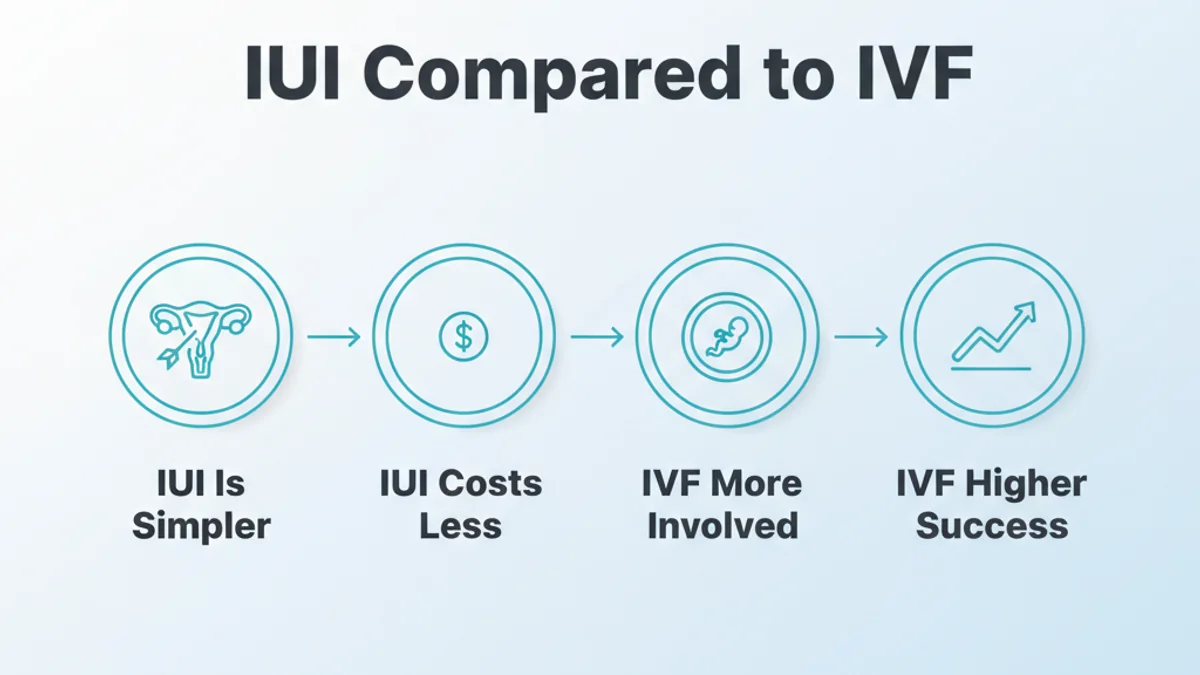
IUI may be a suitable option for couples who:
- Have unexplained infertility.
- Have mild male factor infertility (e.g., slightly low sperm count or motility).
- Have ovulation disorders that can be corrected with medication.
- Are single women or same-sex female couples using donor sperm.
IVF may be a more appropriate choice for couples who:
- Have blocked or severely damaged fallopian tubes.
- Have severe male factor infertility (e.g., very low sperm count, poor motility, or abnormal morphology).
- Have endometriosis.
- Have failed multiple IUI cycles.
- Have genetic disorders and wish to undergo preimplantation genetic testing (PGT).
- Are women over 35, as success rates with IUI decline with age.
In my clinical experience, I've seen that patients with more complex fertility issues often benefit from the comprehensive approach of IVF, while those with milder issues may find success with IUI. It's crucial to have a thorough evaluation to determine the best course of action.
Success Rates of IUI vs. IVF
Success rates are a critical factor to consider when choosing between IUI and IVF. However, it's important to remember that success rates can vary widely depending on individual factors such as age, underlying fertility issues, and the clinic's expertise.
IUI Success Rates:
IUI success rates typically range from 10-20% per cycle. Factors that can influence IUI success include:
- Age: Younger women generally have higher success rates.
- Sperm Quality: Better sperm quality increases the chances of fertilisation.
- Number of Follicles: Stimulating multiple follicles can increase the chances of pregnancy, but also increases the risk of multiple pregnancies.
- Underlying Fertility Issues: The cause of infertility plays a significant role in IUI success.
IVF Success Rates:
IVF success rates are generally higher than those of IUI, often ranging from 40-65% per cycle, depending on the woman's age and the quality of the embryos. Factors that can influence IVF success include:
- Age: Younger women have higher success rates due to better egg quality.
- Embryo Quality: High-quality embryos have a greater chance of implanting.
- Underlying Fertility Issues: The cause of infertility can impact IVF success.
- Clinic Expertise: The experience and expertise of the IVF clinic can significantly affect outcomes.
According to a study published in September 2025, IVF resulted in a significantly higher pregnancy rate (46%) compared to IUI (33.3%). Live birth rates were also significantly higher in the IVF group (40.7%) compared to the IUI group (27.3%).
IUI vs. IVF Cost in Chennai
The cost of fertility treatments is a significant consideration for many couples. IUI is generally less expensive than IVF.
IUI Cost in Chennai:
The cost of IUI in Chennai typically ranges from ₹10,000 to ₹20,000 per cycle. This includes:
- Consultation fees
- Semen analysis and preparation
- Ovulation induction medications (if needed)
- Insemination procedure
- Monitoring ultrasounds
IVF Cost in Chennai:
The cost of IVF in Chennai can range from ₹1,50,000 to ₹2,50,000 per cycle. This includes:
- Consultation fees
- Ovarian stimulation medications
- Egg retrieval procedure
- Fertilisation (including ICSI, if needed)
- Embryo culture
- Embryo transfer
- Monitoring blood tests and ultrasounds
Additional costs may include:
- Preimplantation genetic testing (PGT)
- Embryo freezing and storage
- Medications for luteal phase support
Here's a comparison table outlining the key differences in cost and other factors between IUI and IVF:
| Feature | IUI | IVF |
|---|---|---|
| Cost (per cycle) | ₹10,000 - ₹20,000 | ₹1,50,000 - ₹2,50,000 |
| Success Rate | 10-20% | 40-65% |
| Invasiveness | Less invasive | More invasive |
| Procedure Time | Quick, few minutes | Several weeks |
| Medication | Oral or injectable (if needed) | Injectable |
| Lab Involvement | Sperm preparation only | Egg retrieval, fertilisation, embryo culture |
| Typical Candidates | Unexplained, mild male factor, ovulation disorders | Blocked tubes, severe male factor, endometriosis |
Risks and Side Effects
Both IUI and IVF carry some risks and potential side effects.
IUI Risks and Side Effects:
- Multiple Pregnancy: Stimulating multiple follicles increases the risk of twins or higher-order multiples.
- Ovarian Hyperstimulation Syndrome (OHSS): Rare, but can occur with ovulation induction medications.
- Infection: Very rare, but possible with any intrauterine procedure.
IVF Risks and Side Effects:
- Multiple Pregnancy: Transferring multiple embryos increases the risk of multiple pregnancies.
- Ovarian Hyperstimulation Syndrome (OHSS): More common than with IUI, especially in women with PCOS.
- Egg Retrieval Complications: Bleeding, infection, or damage to surrounding organs are rare but possible.
- Ectopic Pregnancy: Slightly increased risk compared to natural conception.
- Emotional Stress: The IVF process can be emotionally demanding.
What to Expect After IUI vs. IVF
The post-treatment period is crucial for both IUI and IVF.
After IUI:
- You may be advised to rest for a short period after the procedure.
- Avoid strenuous activity for the rest of the day.
- Continue taking any prescribed medications.
- A pregnancy test is usually performed about two weeks after the procedure.
After IVF:
- You may be advised to rest for the remainder of the day.
- Continue taking prescribed medications to support the uterine lining.
- Avoid strenuous activity and heavy lifting.
- A blood test is performed about two weeks after the embryo transfer to determine if pregnancy has occurred.
It's important to follow your fertility specialist's instructions carefully and report any unusual symptoms or concerns.

When to Seek Professional Help
Deciding between IUI and IVF is a significant decision that should be made in consultation with a qualified fertility specialist. If you have been trying to conceive for more than a year (or six months if you are over 35), it's time to seek professional help. A fertility specialist can evaluate your individual situation, identify any underlying fertility issues, and recommend the most appropriate treatment plan. Compare our IVF treatment in Chennai and IUI treatment to see which fits your situation. For personalised guidance, book a consultation with Dr. Rukkayal Fathima.

Dr. Rukkayal Fathima
MBBS, MS (OBG), MRCOG (UK), FRM (Kiel University)
Fertility Specialist, Obstetrician, Gynecologist & Laparoscopic Surgeon
Dr. Rukkayal Fathima is one of India's leading Gynaecologists and the best fertility doctor in Chennai. She has 12+ years of experience and treated 3000+ patients. She specialises in IVF, ICSI, TESA/Micro TESE, IUI, Early Pregnancy Scan, Menopause advice, and Gynaecological surgeries. She is a Co-founder & Director of Yaal Fertility and Women's Centre, the Best Fertility Center in Chennai.
Have Questions About IVF Treatment?
Every situation is unique. Dr. Rukkayal Fathima provides personalised, evidence-based guidance across multiple locations in Chennai.
Frequently Asked Questions
IUI (Intrauterine Insemination) involves placing sperm directly into the uterus, aiming to increase the number of sperm reaching the egg. IVF (In Vitro Fertilisation) involves fertilising the egg with sperm outside the body in a lab, then transferring the embryo to the uterus.
IUI success rates in Chennai typically range from 10-20% per cycle, depending on factors like age, sperm quality, and underlying fertility issues. Multiple cycles may be recommended to increase the chances of success. Ovarian stimulation alongside IUI can improve success.
The cost of IVF in Chennai can vary between ₹1,50,000 to ₹2,50,000 per cycle, depending on the clinic, medications, and any additional procedures like ICSI or genetic testing. This cost typically includes monitoring, egg retrieval, fertilisation, and embryo transfer.
Generally, IVF has a higher success rate than IUI because fertilisation occurs in a controlled laboratory environment, and embryos are selected for transfer. However, IVF is also more invasive and expensive. IUI may be a suitable first step for some couples.
Typically, 3-6 IUI cycles are recommended before considering IVF, especially if you are under 35 and have no other significant fertility factors. If IUI is unsuccessful after this point, IVF may offer a better chance of conception.
Factors include age, the cause and duration of infertility, sperm quality, tubal patency, and previous treatment history. Women with blocked fallopian tubes or severe male factor infertility are more likely to be recommended for IVF directly.
Consult Dr. Rukkayal in Chennai
Available at 4 fertility clinic locations across Chennai. Walk-ins welcome; appointments preferred.
No. 747, Poonamallee High Road, Alagappa Nagar, Kilpauk, Chennai – 600 010
No. 149/1, Luz Church Road, Bhaskarapuram, Mylapore, Chennai – 600 004
No. 95, Plot No. 1, Velachery Main Road, Devi Karumariamman Nagar, Pallikaranai, Chennai – 600 100
Dr. Rukkayal is also a visiting consultant at Apollo Hospital, Motherhood Hospital, Cloud Nine Hospital, MGM Hospital, Metha Hospital and St. Isabel Hospital in Chennai. View all clinic locations