Egg Freezing Cost in Chennai: Is It Right for You?
This article is part of our guide on Fertility Preservation in Chennai — see the full treatment overview, success rates, and costs.
Are you considering egg freezing in Chennai to preserve your fertility? The cost of egg freezing in Chennai typically ranges from ₹1,40,000 to ₹2,30,000 per cycle, but it's an investment in your future reproductive options. This blog post will provide a comprehensive overview of the egg freezing process, costs involved, success rates, and other important factors to help you make an informed decision.
What Is Egg Freezing and How Does It Work?
Egg freezing, also known as oocyte cryopreservation, is a procedure that allows women to preserve their eggs for potential future use. It involves retrieving a woman's eggs, freezing them using a rapid freezing technique called vitrification, and storing them in liquid nitrogen. When the woman is ready to use the eggs, they are thawed, fertilized with sperm in a laboratory setting (IVF), and then transferred to the uterus as embryos.
The primary reasons women consider egg freezing include:
- Social Egg Freezing: Elective fertility preservation for women who want to delay childbearing to focus on their career, education, or personal goals. Many professional women in Chennai are increasingly opting for social egg freezing to extend their reproductive window.
- Medical Egg Freezing: Preserving fertility before undergoing medical treatments such as chemotherapy or radiation, which can damage the ovaries and reduce egg quality.
- Genetic Conditions: Women with a family history of early menopause or other genetic conditions that may affect their fertility.
As a fertility specialist practising across the seven Yaal Fertility centres in Chennai, including Kilpauk and Mylapore, I often consult with women exploring egg freezing as a proactive step towards family planning. In my clinical experience, those who freeze their eggs at a younger age tend to have better outcomes due to higher egg quality. However, it's crucial to have realistic expectations and understand that egg freezing doesn't guarantee a future pregnancy.
Who Needs Egg Freezing?
Egg freezing can be a suitable option for women in various situations. Here's a breakdown of who might benefit from this fertility preservation technique:
- Women Delaying Childbearing: As women age, the quality and quantity of their eggs decline, making it more difficult to conceive. Egg freezing offers a way to preserve younger, healthier eggs for future use. Data shows that women freezing before 35 have significantly higher success rates than those who freeze after 40.
- Women Undergoing Cancer Treatment: Chemotherapy and radiation can damage the ovaries, leading to infertility. Egg freezing before treatment can help preserve a woman's ability to have children later.
- Women with Genetic Conditions: Certain genetic conditions, such as premature ovarian failure, can cause early menopause and infertility. Egg freezing can provide these women with the option to have biological children in the future.
- Women Undergoing IVF: In some cases, women undergoing IVF may choose to freeze extra eggs or embryos for future cycles.
- Women with Career Aspirations: Many women in Chennai are focusing on their careers and may not be ready to start a family until their late 30s or early 40s. Egg freezing allows them to pursue their professional goals without compromising their future fertility.
- Women Seeking Reproductive Autonomy: Egg freezing empowers women to take control of their reproductive future and make choices that align with their personal and professional goals.
It's essential to consult with a fertility specialist to determine if egg freezing is the right choice for you. During a consultation, your medical history, ovarian reserve, and reproductive goals will be evaluated to provide personalized recommendations. As a fertility specialist, I always advise women to consider their long-term family planning goals and discuss their options with a qualified professional.
Egg Freezing Step-by-Step Process
The egg freezing process involves several key steps:
- Initial Consultation and Evaluation: This includes a review of your medical history, a physical exam, and fertility testing, such as blood tests to measure hormone levels (FSH, LH, AMH) and an ultrasound to assess your ovarian reserve.
- Ovarian Stimulation: You will receive hormone injections to stimulate your ovaries to produce multiple eggs. This process typically lasts 10-12 days and requires regular monitoring through blood tests and ultrasounds. The goal is to develop multiple mature follicles, each containing an egg.
- Egg Retrieval: Once the follicles are mature, a trigger shot of hCG is administered to induce final egg maturation. Approximately 36 hours later, the eggs are retrieved through a minimally invasive procedure called transvaginal ultrasound-guided aspiration. This involves inserting a needle through the vaginal wall into the ovaries to collect the eggs. The procedure is usually performed under sedation or local anesthesia.
- Egg Freezing (Vitrification): The retrieved eggs are immediately frozen using a rapid freezing technique called vitrification. Vitrification involves cooling the eggs very quickly to prevent ice crystal formation, which can damage the eggs.
- Storage: The frozen eggs are stored in liquid nitrogen tanks at extremely low temperatures (-196°C) until you are ready to use them.
- Thawing and Fertilization: When you are ready to use your eggs, they are thawed and fertilized with sperm in a laboratory through in vitro fertilization (IVF). The resulting embryos are then transferred to your uterus in hopes of achieving pregnancy.
My direct involvement in the IVF lab, selecting and grading embryos under magnification, allows me to provide personalized insights and recommendations at each stage of the process. Patients often ask me about the discomfort level during egg retrieval. While individual experiences vary, most women report mild cramping or discomfort, which can be managed with pain medication.
Success Rates of Egg Freezing
The success rates of egg freezing depend on several factors, including:
- Age at the Time of Freezing: The younger you are when you freeze your eggs, the higher the chances of a successful pregnancy later. Eggs from younger women are generally of higher quality and have a greater potential for fertilization and implantation. A study in the Journal of Ovarian Research showed significantly higher live birth rates when freezing was done at younger ages (50% vs. 22.9% for women over 36).
- Number of Eggs Frozen: The more eggs you freeze, the higher the likelihood of having a successful pregnancy. Most fertility specialists recommend freezing at least 15-20 mature eggs for a reasonable chance of one live birth, especially if you are over 35.
- Egg Quality: Egg quality declines with age, so freezing eggs at a younger age increases the chances of preserving high-quality eggs.
- Clinic Expertise: The experience and expertise of the fertility clinic and embryology lab can also impact success rates. Choose a clinic with a proven track record of successful egg freezing and IVF outcomes.
- Thawing and Fertilization Techniques: The techniques used to thaw and fertilize the eggs can also affect success rates. Vitrification, the rapid freezing method, has significantly improved egg survival rates compared to older slow-freezing methods.
| Age at Freezing | Oocyte Survival Rate (Thawing) | Live Birth Rate per Woman |
|---|---|---|
| Under 35 | 90-95% | 45-55% |
| 35-37 | 85-90% | 35-45% |
| 38-40 | 80-85% | 25-35% |
| Over 40 | 70-80% | 15-25% |
Note: These are approximate ranges and can vary based on individual factors and clinic protocols.
A 2023 systematic review and meta-analysis in Human Reproduction Update reported an oocyte survival rate of 78% and a live birth rate per woman of 28%. Women who froze before 35 had more than double the live birth rate compared to those who froze after 40.
Egg Freezing Cost in Chennai
The cost of egg freezing in Chennai can vary depending on the clinic and the specific services included. Here's a general breakdown of the costs involved:
- Initial Consultation and Evaluation: ₹5,000 - ₹10,000
- Ovarian Stimulation Medications: ₹50,000 - ₹80,000
- Egg Retrieval Procedure: ₹30,000 - ₹50,000
- Egg Freezing and Initial Storage: ₹55,000 - ₹90,000
- Annual Storage Fees: ₹10,000 - ₹30,000 per year
Total Cost per Cycle: ₹1,40,000 - ₹2,30,000
Keep in mind that these are approximate ranges, and the actual cost may vary based on your individual needs and the clinic you choose. Some clinics offer package deals that include multiple cycles or discounted storage fees.
It's important to inquire about all the costs involved upfront and understand what is included in the price. Some clinics may charge additional fees for monitoring appointments, anesthesia, or other services. Egg freezing is generally not covered by standard health insurance policies in India unless it's for medical reasons like cancer treatment.
Disclaimer: These are approximate cost ranges for Chennai in 2026. Your actual cost will depend on your specific diagnosis, treatment plan, and clinic chosen. A detailed estimate is provided after your initial consultation.
Risks and Side Effects
Egg freezing is generally considered a safe procedure, but like any medical intervention, it carries some potential risks and side effects:
- Ovarian Hyperstimulation Syndrome (OHSS): This is a rare but potentially serious complication of ovarian stimulation. It occurs when the ovaries become enlarged and fluid leaks into the body. Symptoms can range from mild abdominal discomfort to severe nausea, vomiting, and shortness of breath. OHSS is usually self-limiting, but in rare cases, it may require hospitalization.
- Egg Retrieval Complications: The egg retrieval procedure is generally safe, but there is a small risk of bleeding, infection, or damage to the bowel or bladder.
- Emotional Stress: The egg freezing process can be emotionally challenging, especially if multiple cycles are needed or if the outcome is uncertain. It's important to have a strong support system and consider counseling if you are feeling overwhelmed.
- Risks Associated with Future IVF: When you decide to use your frozen eggs, you will need to undergo IVF, which carries its own set of risks and side effects, such as multiple pregnancy and ectopic pregnancy.
In my practice, I prioritize patient safety and take all necessary precautions to minimize the risks associated with egg freezing. I closely monitor patients during ovarian stimulation and egg retrieval to detect and manage any potential complications.
What to Expect After Egg Freezing
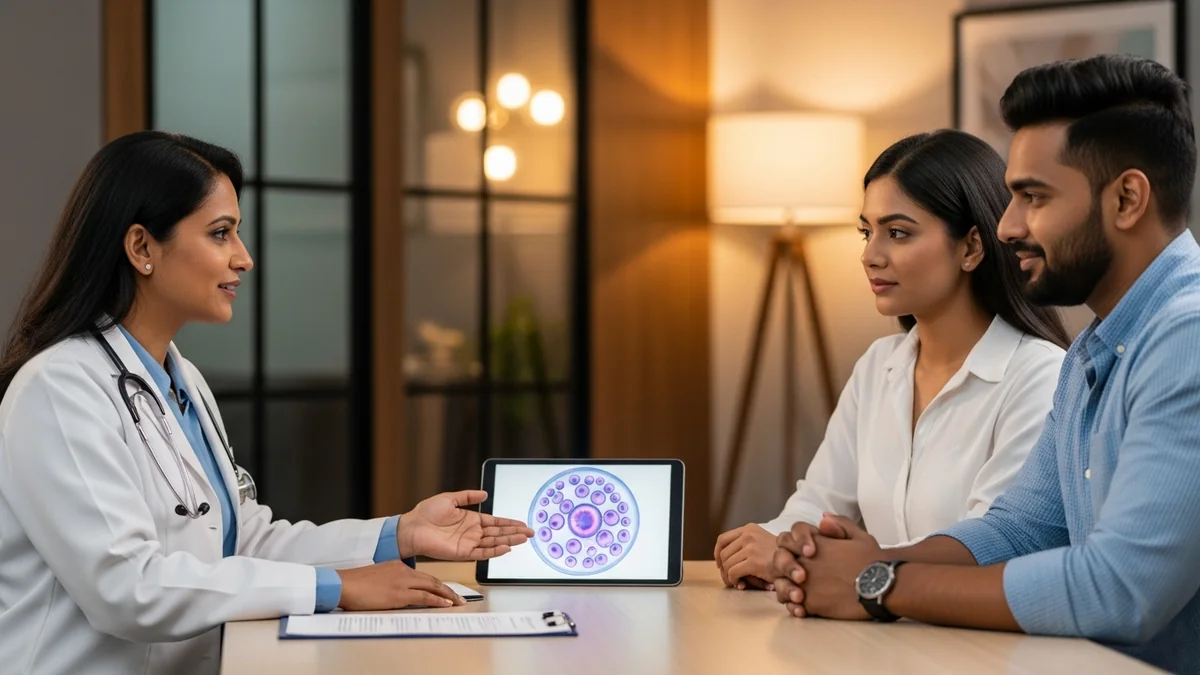
After the egg retrieval procedure, you may experience mild cramping, bloating, or spotting for a few days. These symptoms are usually mild and can be managed with over-the-counter pain medication. It's important to avoid strenuous activity and get plenty of rest during this time.
You can typically resume your normal activities within a few days. Your next menstrual period should arrive within 1-2 weeks. There are no long-term health risks associated with egg freezing. The frozen eggs can be stored for many years without significant degradation in quality. The ICMR provides guidelines for ART clinics, including regulations for long-term egg storage, consent protocols, and reporting standards.
When you are ready to use your frozen eggs, you will need to undergo IVF. The eggs will be thawed, fertilized with sperm, and the resulting embryos will be transferred to your uterus. The success rates of IVF using frozen eggs are comparable to those of IVF using fresh eggs, especially when the eggs were frozen at a younger age.
Learn more about our fertility preservation and egg freezing services. For personalised guidance, book a consultation with Dr. Rukkayal Fathima.

Dr. Rukkayal Fathima
MBBS, MS (OBG), MRCOG (UK), FRM (Kiel University)
Fertility Specialist, Obstetrician, Gynecologist & Laparoscopic Surgeon
Dr. Rukkayal Fathima is a fertility specialist, obstetrician and gynaecologist in Chennai. She has 15+ years of experience and treated 3000+ patients. She specialises in IVF, ICSI, TESA/Micro TESE, IUI, Early Pregnancy Scan, Menopause advice, and Gynaecological surgeries. She is the Founder & Director of Yaal Fertility and Women's Centre, which runs 7 fertility centres across Chennai.
Have Questions About Fertility Preservation?
Every situation is unique. Dr. Rukkayal Fathima provides personalised, evidence-based guidance across multiple locations in Chennai.
Frequently Asked Questions
Egg freezing, or oocyte cryopreservation, is a method to preserve a woman's eggs for potential future use. It involves extracting eggs from the ovaries, freezing them, and storing them. This allows women to postpone pregnancy without the age-related decline in egg quality. It's commonly used for social reasons (delaying childbearing) or medical reasons (e.g., before cancer treatment).
The best time to freeze your eggs is typically in your late 20s to early 30s, as egg quality and quantity are generally higher at this age. Freezing eggs before age 35 offers a significantly better chance of a successful pregnancy later in life. However, women in their late 30s can still benefit, although more eggs may be needed.
The cost of egg freezing in Chennai typically ranges from ₹1,40,000 to ₹2,30,000 per cycle. This includes consultations, hormone injections, and the egg retrieval procedure. Additional costs may include annual storage fees (₹10,000 - ₹30,000) and future thawing and fertilization (IVF) which can range from ₹70,000 to ₹1,50,000.
Success rates depend on your age at the time of freezing. Women who freeze their eggs before 35 have significantly higher success rates—studies report over 50% live birth rates per patient. For women who freeze after 40, live birth rates can be around 19%. Oocyte survival rates are generally around 78%.
Eggs can be stored for many years without significant degradation in quality. There is no strict time limit, but regulations and clinic policies may vary. The ICMR provides guidelines for ART clinics, including regulations for long-term egg storage, consent protocols, and reporting standards. Ensure your clinic complies with these regulations.
Egg freezing is generally a safe procedure. Risks are similar to those of IVF and include ovarian hyperstimulation syndrome (OHSS), which is rare, and minor complications from egg retrieval. Most women experience mild bloating or cramping after the procedure. Serious complications are uncommon.
In India, egg freezing is generally not covered by standard health insurance policies unless it's for medical reasons, such as preserving fertility before cancer treatment. It's best to check with your insurance provider to understand your coverage options.
Consult Dr. Rukkayal at Yaal Fertility, Chennai
Dr. Rukkayal is the Founder & Director of Yaal Fertility and Women's Centre and consults at all 7 Yaal centres. Walk-ins welcome; appointments preferred.
Full hospital · IVF lab & ICU
No. 747, Poonamallee High Road, Alagappa Nagar, Kilpauk, Chennai – 600 010
Theatre & recovery
First Floor, Kumar Towers, Bus Depot, Opp. Padianallur, PT Murthy Nagar, Padiyanallur, Red Hills, Chennai – 600 052
IVF lab & theatre
2nd Floor, Dr. Mehta's Global Campus, No. 50, Poonamallee High Road, Velappanchavadi, Thiruverkadu, Chennai – 600 077
Consultation & andrology lab
No. 149/1, Luz Church Road, Bhaskarapuram, Mylapore, Chennai – 600 004
IVF lab & theatre
Second Floor, No. 1, 3rd Street, Malaviya Avenue, Thiruvanmiyur, Chennai – 600 041
Consultation & andrology lab
No. 95, Plot No. 1, Velachery Main Road, Devi Karumariamman Nagar, Pallikaranai, Chennai – 600 100
Consultation & andrology lab
3/5, Kannan Nagar 3rd Main Road, Vigneshwar Nagar, Madipakkam, Chennai – 600 091
Book any centre on the Yaal line, +91 75500 06704. Compare all Yaal centres