How Conception Works: Your Journey to Pregnancy
This article is part of our guide on Female Fertility in Chennai — see the full treatment overview, success rates, and costs.
Embarking on the journey to parenthood is often filled with hope, excitement, and sometimes, a few questions. As a fertility specialist in Chennai, I often meet couples eager to understand the fundamental process: how conception works. It might seem like a simple question, but the intricate dance of biology that leads to a new life is truly remarkable. Understanding this journey, from the moment an egg is released to when an embryo finds its home, can empower you with knowledge and help you time your efforts effectively. Let’s explore this incredible process together.
How Does Pregnancy Happen? Understanding the Basics of Conception
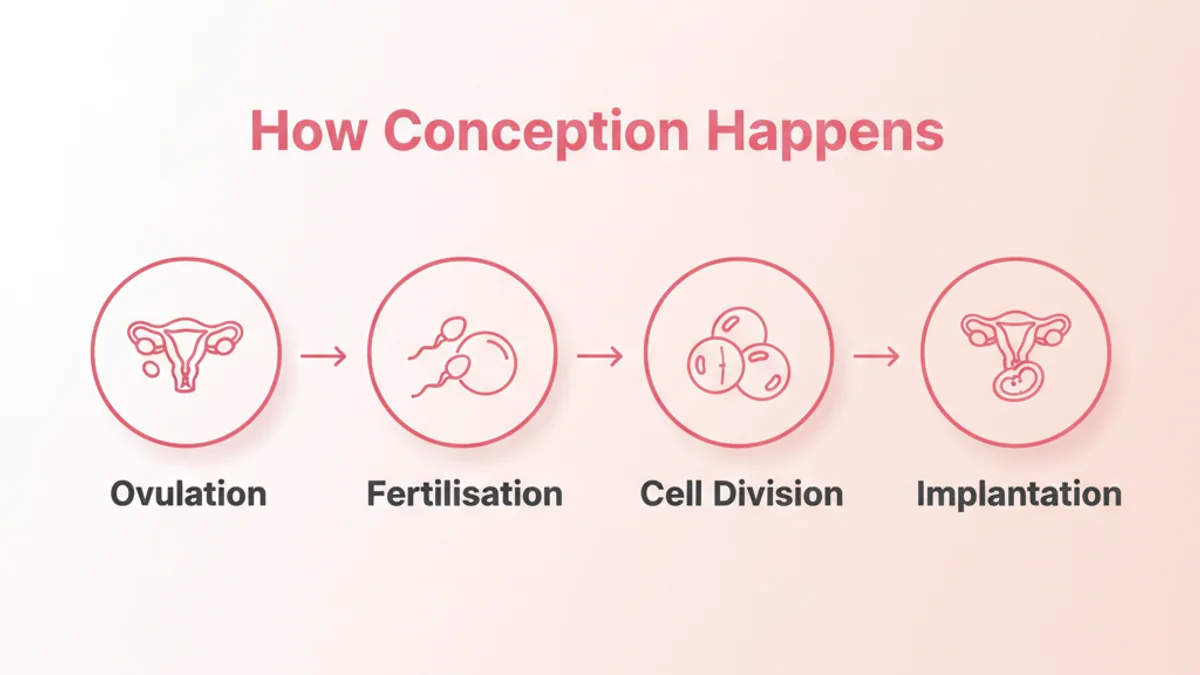
Pregnancy begins with conception, a precise sequence of biological events that transforms two individual cells into the start of a new human life. In essence, it involves a sperm from the male partner meeting and fertilising an egg from the female partner. This union typically takes place within the woman's fallopian tube, followed by the newly formed embryo travelling to the uterus to implant and grow. For couples trying to conceive, especially here in Chennai, understanding these steps is the first crucial step. My clinical experience, spanning over 3000 couples and 3000 IVF cycles, shows that knowledge truly empowers couples on their fertility journey.
The entire process, from ovulation to successful implantation, takes about two to three weeks. While it sounds straightforward, each stage requires perfect timing and healthy reproductive cells. Over 80% of couples under 40 years old will conceive within one year of regular unprotected sexual intercourse, and about half of those who don't conceive in the first year will do so in the second, leading to a cumulative pregnancy rate over 90%, according to NICE guidelines.
The Star of the Show: Ovulation and Your Fertile Window Explained
For conception to occur, a woman must first ovulate, which is the release of a mature egg from one of her ovaries. This event is the cornerstone of female fertility and typically happens once during each menstrual cycle. The menstrual cycle, on average, lasts about 28 days, but it can vary significantly from woman to woman. Ovulation usually occurs around the middle of the cycle, roughly 14 days before your next period is due.
The period leading up to and including ovulation is known as the "fertile window." This window spans about 6 days, ending on the day of ovulation itself, as highlighted by the American Society for Reproductive Medicine (ASRM). Sperm can survive inside the female reproductive tract for up to 5 days, while an egg is viable for about 12-24 hours after release. Therefore, having unprotected intercourse during this fertile window significantly increases your chances. You can work out your fertile days with our ovulation calculator to help pinpoint the best time. If you're wondering how to know if you are ovulating, there are several signs and methods you can use.
The Role of Hormones in Egg Release
The intricate process of ovulation is orchestrated by a complex interplay of hormones. Early in the menstrual cycle, the pituitary gland in your brain releases Follicle-Stimulating Hormone (FSH). FSH encourages several ovarian follicles (tiny sacs containing immature eggs) to grow. As these follicles develop, they produce oestrogen (specifically estradiol), which thickens the lining of the uterus (endometrium) to prepare it for a potential pregnancy.
When oestrogen levels reach a certain peak, it triggers a surge in another pituitary hormone called Luteinizing Hormone (LH). This LH surge is the signal for the most mature follicle to rupture and release its egg – this is ovulation. After ovulation, the ruptured follicle transforms into the corpus luteum, which then produces progesterone. Progesterone further prepares the uterine lining for embryo implantation and supports early pregnancy if conception occurs.
The Sperm's Epic Journey: When Sperm Meets Egg
While the egg awaits its destiny, the male partner's contribution—sperm—embarks on an extraordinary journey. During ejaculation, millions of sperm are released into the vagina. However, only a tiny fraction of these will successfully navigate the challenging path through the cervix, uterus, and into the fallopian tubes where the egg might be waiting. This arduous journey is a testament to the resilience and determination of these microscopic cells.
Sperm face many obstacles, including the acidic environment of the vagina, the thick cervical mucus, and the sheer distance they must travel. Only the fittest and most motile (active) sperm have a chance to reach the egg. Understanding male fertility is crucial, as sperm quality, count, and motility are just as vital as egg health for successful conception. Healthy sperm can survive in the female reproductive tract for up to 5 days, increasing the chances of meeting an egg even if intercourse occurs a few days before ovulation.
The Egg's Active Role in Guiding Sperm
For a long time, the egg was considered a passive recipient in the fertilisation process. However, recent research has revealed that the egg plays a much more active and dynamic role in attracting and interacting with sperm. Studies, such as one from the University of Virginia, show that the egg expresses specific molecular partners on its surface that actively engage with substances on the sperm to facilitate fusion. It's not just about sperm finding the egg; the egg actively participates in signalling and guiding the sperm.
Furthermore, research from Washington University in 2025 identified a temperature-sensitive switch within sperm cells called the CatSper ion channel. When sperm encounter the warmer temperature of the female reproductive tract (closer to 37.8°C), this channel activates, flooding the sperm with calcium ions. This influx triggers a high-speed, whip-like movement known as hyperactivation, which is essential for sperm to penetrate the egg's protective layers and achieve fertilisation. This discovery highlights the intricate biological mechanisms at play and the egg's influence on sperm behaviour.
The Moment of Magic: How Fertilisation Happens
Once a capacitated sperm (sperm that has undergone biochemical changes to become capable of fertilisation) reaches the egg in the fallopian tube, the moment of fertilisation can occur. The egg is surrounded by several protective layers, including the cumulus oophorus and the zona pellucida. The sperm must first penetrate these layers. When a single sperm successfully binds to and penetrates the zona pellucida, it triggers a crucial event known as the acrosome reaction, where enzymes released from the sperm's head help it burrow through.
Upon entry of the first sperm, the egg undergoes rapid changes to prevent multiple sperm from entering, a phenomenon called polyspermy, which is usually fatal for the embryo. Research from Karolinska Institutet in 2024 revealed that the egg's outer coat, the zona pellucida, tightens and undergoes a mechanical change by cleaving a protein called ZP2, making it impermeable to additional sperm. Once inside, the genetic material (pronuclei) from both the sperm and egg merge, forming a single cell called a zygote. This zygote contains a unique combination of 46 chromosomes – 23 from the mother and 23 from the father – marking the beginning of a new individual.
A New Home: Implantation Explained and Early Signs
After fertilisation, the newly formed zygote begins a remarkable journey. It starts dividing rapidly, first into two cells, then four, then eight, and so on, while slowly travelling down the fallopian tube towards the uterus. This dividing cell cluster is now called an embryo. Around 3-5 days after fertilisation, the embryo reaches the uterus, developing into a blastocyst—a hollow ball of cells.
The next critical step is implantation, where the blastocyst attaches itself to the thick, blood-rich lining of the uterus (the endometrium). This usually occurs 6-12 days after ovulation. The uterine lining, prepared by the hormone progesterone, provides the ideal environment for the embryo to embed and begin receiving nourishment. Successful implantation marks the official start of pregnancy. While many women don't experience any noticeable signs, some might observe early implantation signs and the implantation window, such as light spotting (often called implantation bleeding) or mild cramping around the time implantation occurs. However, these signs are not definitive, and a positive pregnancy test remains the most reliable indicator.
Optimizing Your Chances: What Helps a Baby Be Conceived?
Understanding the biological process of conception is a powerful tool, but what practical steps can you take to optimise your chances? As a fertility specialist in Chennai, I always advise couples to focus on holistic well-being and informed timing. The World Health Organization (WHO) and ASRM guidelines emphasise several key areas:
- Timing Intercourse: Have regular unprotected intercourse every 1-2 days during your fertile window. This ensures a constant supply of healthy sperm is available when the egg is released.
- Healthy Weight: Maintain a healthy Body Mass Index (BMI). For women, a BMI under 19 or over 30 can affect ovulation. For men, obesity can impact sperm quality.
- Balanced Diet: Focus on a nutrient-rich diet.
- Avoid Harmful Substances:
- Smoking: Both active and passive smoking reduce conception chances for women and can damage sperm quality in men.
- Alcohol: Excessive alcohol intake can negatively impact fertility in both partners.
- Recreational Drugs: Avoid all recreational drugs.
- Manage Stress: High stress levels can disrupt hormonal balance. Incorporate relaxation techniques like yoga or meditation.
By proactively addressing these factors, you can significantly improve your natural fertility. Knowing the signs of high fertility in a woman can also be empowering. If you have concerns about your fertility or are looking for a comprehensive female fertility assessment in Chennai, seeking professional guidance can provide clarity and support.
Simple Steps for Both Partners
Conception is a shared journey, and both partners play an equally vital role. Here are some actionable tips for both men and women:
- Folic Acid Supplementation: Women should take a daily folic acid supplement (400 mcg/day) even before conception to reduce the risk of neural tube defects in the baby, as recommended by ASRM. Folic acid also supports sperm health.
- Nutrient-Rich Diet:
- Zinc: Essential for egg maturation and hormone regulation in women, and crucial for sperm production and function in men.
- Selenium: An antioxidant that protects against chromosome breakage and aids sperm formation.
- Vitamin D: Important for immune and endocrine system regulation, fostering a healthy reproductive environment.
- CoQ10: An antioxidant that helps improve egg quality and sperm motility, especially as age progresses.
- Regular Exercise: Moderate physical activity is beneficial, but avoid excessive, strenuous exercise which can sometimes disrupt ovulation.
- Adequate Sleep: Ensure 7-9 hours of quality sleep each night to support overall hormonal balance.
- Limit Caffeine: While moderate caffeine intake is generally considered safe, high consumption may be linked to reduced fertility.

Your Path
Understanding how conception works is the first step on a hopeful path. While the biological process is complex, remember that millions of couples successfully navigate this journey every year. It’s a testament to the incredible design of the human body and the power of perseverance. If you've been trying to conceive and have questions, or if you're over 35 and have been trying for more than six months, please know that you are not alone. There are effective, evidence-based solutions available.
My team and I are dedicated to providing compassionate, personalised fertility care across the seven Yaal Fertility centres in Chennai, including Kilpauk, Mylapore and Thiruvanmiyur. We are here to guide you through every step, offering expert advice grounded in international training and extensive clinical experience. For personalised guidance, book a consultation with Dr. Rukkayal Fathima. We believe in empowering you with knowledge and support to help realise your dream of starting a family.

Dr. Rukkayal Fathima
MBBS, MS (OBG), MRCOG (UK), FRM (Kiel University)
Fertility Specialist, Obstetrician, Gynecologist & Laparoscopic Surgeon
Dr. Rukkayal Fathima is a fertility specialist, obstetrician and gynaecologist in Chennai. She has 15+ years of experience and treated 3000+ patients. She specialises in IVF, ICSI, TESA/Micro TESE, IUI, Early Pregnancy Scan, Menopause advice, and Gynaecological surgeries. She is the Founder & Director of Yaal Fertility and Women's Centre, which runs 7 fertility centres across Chennai.
Have Questions About Female Fertility?
Every situation is unique. Dr. Rukkayal Fathima provides personalised, evidence-based guidance across multiple locations in Chennai.
Frequently Asked Questions
The best time is during your 'fertile window,' a 6-day period ending on the day of ovulation. This is when a mature egg is released and available for fertilisation. Having intercourse every 1-2 days during this window significantly increases your chances of conception.
For couples trying to conceive naturally, having regular unprotected intercourse every 2-3 days throughout the cycle is generally recommended. During the fertile window, intercourse every 1-2 days can maximise the chances, as sperm can survive inside the female body for several days.
Maintaining a healthy weight, eating a balanced diet rich in folic acid and zinc, exercising regularly, and managing stress are crucial. Avoiding smoking, excessive alcohol, and recreational drugs for both partners can significantly boost fertility and overall reproductive health.
For couples under 40, over 80% conceive within one year of regular unprotected intercourse. About half of those who don't conceive in the first year will do so in the second. If you're over 35 and haven't conceived after 6 months, consider a consultation.
Fertilisation is when a single sperm successfully penetrates a mature egg, typically in the fallopian tube. The genetic material from both the sperm and egg combine to form a zygote, the very first cell of a new life. The egg then undergoes changes to prevent other sperm from entering.
Implantation occurs when the early embryo attaches to the uterine lining. While many women don't notice specific signs, some may experience light spotting (implantation bleeding), mild cramping, or breast tenderness around 6-12 days after ovulation. These can also be non-pregnancy related, so a pregnancy test is key.
Consult Dr. Rukkayal at Yaal Fertility, Chennai
Dr. Rukkayal is the Founder & Director of Yaal Fertility and Women's Centre and consults at all 7 Yaal centres. Walk-ins welcome; appointments preferred.
Full hospital · IVF lab & ICU
No. 747, Poonamallee High Road, Alagappa Nagar, Kilpauk, Chennai – 600 010
Theatre & recovery
First Floor, Kumar Towers, Bus Depot, Opp. Padianallur, PT Murthy Nagar, Padiyanallur, Red Hills, Chennai – 600 052
IVF lab & theatre
2nd Floor, Dr. Mehta's Global Campus, No. 50, Poonamallee High Road, Velappanchavadi, Thiruverkadu, Chennai – 600 077
Consultation & andrology lab
No. 149/1, Luz Church Road, Bhaskarapuram, Mylapore, Chennai – 600 004
IVF lab & theatre
Second Floor, No. 1, 3rd Street, Malaviya Avenue, Thiruvanmiyur, Chennai – 600 041
Consultation & andrology lab
No. 95, Plot No. 1, Velachery Main Road, Devi Karumariamman Nagar, Pallikaranai, Chennai – 600 100
Consultation & andrology lab
3/5, Kannan Nagar 3rd Main Road, Vigneshwar Nagar, Madipakkam, Chennai – 600 091
Book any centre on the Yaal line, +91 75500 06704. Compare all Yaal centres