TESA Micro TESE: What's the Difference?

This article is part of our guide on Male Fertility in Chennai — see the full treatment overview, success rates, and costs.
Are you exploring options for surgical sperm retrieval in Chennai? If you've been diagnosed with azoospermia (absence of sperm in the ejaculate), TESA (Testicular Sperm Aspiration) and Micro TESE (Microscopic Testicular Sperm Extraction) are two procedures that can help. But what are the key differences, and which one is right for you? This guide, by Dr. Rukkayal Fathima, a leading fertility specialist in Chennai, explains the procedures, their success rates, and what to expect.
What Is TESA and Micro TESE and How Does It Work?
TESA (Testicular Sperm Aspiration) and Micro TESE (Microscopic Testicular Sperm Extraction) are surgical sperm retrieval methods used to obtain sperm directly from the testicles. These procedures are primarily recommended for men diagnosed with azoospermia, where sperm is not present in the ejaculate due to either a blockage (obstructive azoospermia) or a sperm production problem (non-obstructive azoospermia). As a fertility specialist practicing across multiple locations in Chennai, I often see patients who are confused about which procedure is the best option for them.
TESA: This is a simpler procedure that involves inserting a needle directly into the testicle and aspirating tissue and fluid. The extracted sample is then examined under a microscope to identify and collect sperm. TESA can often be performed as an outpatient procedure under local anaesthesia. It's a relatively quick method, but it may not be as effective in cases of non-obstructive azoospermia where sperm production is severely impaired.
Micro TESE: This is a more advanced surgical technique that uses a high-powered operating microscope to visualize the seminiferous tubules (the tiny tubes within the testicles where sperm is produced). The surgeon can then identify and extract tubules that appear more likely to contain sperm. This targeted approach minimizes the amount of tissue removed, reducing the risk of damage to the testicle and preserving its hormone-producing function. Micro TESE is typically performed under general anaesthesia. Studies show that Micro-TESE can result in successful sperm extraction 1.5 times more often than conventional TESE.
In my clinical experience, the choice between TESA and Micro TESE depends heavily on the individual's specific diagnosis and medical history. Micro TESE is generally preferred for men with non-obstructive azoospermia because it offers a higher chance of sperm retrieval.
Who Needs TESA or Micro TESE?
TESA and Micro TESE are primarily indicated for men with azoospermia who are trying to conceive with their partner. However, the specific type of azoospermia and other factors determine which procedure is more appropriate.
TESA is often considered for:
- Obstructive Azoospermia: This occurs when there is a blockage in the reproductive tract preventing sperm from being ejaculated. Causes can include vasectomy, infection, or congenital absence of the vas deferens (CAVD). In these cases, sperm production is usually normal, and TESA can effectively retrieve sperm.
- Diagnostic Purposes: TESA can sometimes be used to confirm the diagnosis of obstructive azoospermia and assess the quality of sperm within the testicles.
Micro TESE is typically recommended for:
- Non-Obstructive Azoospermia (NOA): This occurs when there is a problem with sperm production within the testicles. Causes can include genetic factors, hormonal imbalances, previous infections, or exposure to toxins. Micro TESE's targeted approach increases the chances of finding sperm in these challenging cases. Studies indicate that Micro-TESE can achieve sperm retrieval rates of approximately 45-50% in men with NOA.
- Failed TESA: If TESA has been unsuccessful in retrieving sperm, Micro TESE may be recommended as a second-line option.
- Varicocele Repair: In some cases, varicocele repair (surgical correction of enlarged veins in the scrotum) may be recommended before Micro TESE to improve sperm production.
- High FSH Levels: Elevated levels of follicle-stimulating hormone (FSH) may indicate impaired sperm production, making Micro TESE a more suitable option.
It's important to note that these are general guidelines. A thorough evaluation by a fertility specialist, including a physical exam, hormone testing, and semen analysis, is necessary to determine the most appropriate sperm retrieval method. As a fertility specialist in Chennai, I always emphasize the importance of personalized treatment plans based on individual needs.
TESA and Micro TESE Step-by-Step Process
Both TESA and Micro TESE involve specific steps to ensure the best possible outcome. Here's a breakdown of what you can expect:
TESA Procedure:
- Preparation: The patient will be asked to avoid certain medications and supplements before the procedure. A semen analysis and hormone testing will be performed to assess the cause of azoospermia.
- Anaesthesia: TESA is usually performed under local anaesthesia, numbing the area around the testicle.
- Aspiration: A small needle is inserted into the testicle, and tissue and fluid are aspirated. This may be repeated in several areas of the testicle to increase the chances of sperm retrieval.
- Sperm Retrieval: The aspirated sample is sent to the embryology lab, where it is examined under a microscope. Any sperm found are isolated and prepared for use in IVF with ICSI (intracytoplasmic sperm injection).
- Post-Procedure: The patient may experience mild pain and swelling, which can be managed with pain medication and ice packs.
Micro TESE Procedure:
- Preparation: Similar to TESA, the patient will undergo a thorough evaluation and be asked to follow specific pre-operative instructions. Hormonal optimization may be considered.
- Anaesthesia: Micro TESE is typically performed under general anaesthesia.
- Incision: A small incision is made in the scrotum to expose the testicle.
- Microscopic Examination: An operating microscope is used to visualize the seminiferous tubules. The surgeon identifies tubules that appear dilated or more likely to contain sperm.
- Tissue Extraction: Small pieces of tissue are extracted from these selected tubules.
- Sperm Retrieval: The extracted tissue is sent to the embryology lab, where it is processed to release any sperm. The sperm are then isolated and prepared for IVF with ICSI.
- Closure: The incision is closed with sutures, and a dressing is applied.
- Post-Procedure: The patient will need to rest and avoid strenuous activity for a few days. Pain medication will be prescribed to manage any discomfort.
Coordination with IVF: It's important to coordinate either TESA or Micro TESE with the partner's egg retrieval for fresh sperm use, if possible. If not, the retrieved sperm can be cryopreserved (frozen) for future IVF cycles.
Success Rates of TESA and Micro TESE
The success rates of TESA and Micro TESE vary depending on the underlying cause of azoospermia and other individual factors. It's crucial to have realistic expectations and understand the potential outcomes.
TESA Success Rates:
- For obstructive azoospermia, TESA has a high success rate, often around 90%, as sperm production is usually normal.
- For non-obstructive azoospermia, the success rate of TESA is significantly lower, ranging from 10-30%.
Micro TESE Success Rates:
- Micro TESE generally has a higher sperm retrieval rate compared to TESA, especially in men with non-obstructive azoospermia.
- Studies show that Micro TESE can achieve sperm retrieval rates of approximately 45-50% in men with NOA.
- Factors such as age, FSH levels, and previous testicular procedures can influence the success rate. A retrospective study found that first-time micro-TESE had a significantly higher sperm retrieval rate (64.6%) than repeated procedures (28.8%).
Here's a table summarizing the key differences and success rates:
| Feature | TESA | Micro TESE |
|---|---|---|
| Procedure | Needle aspiration of testicular tissue | Microscopic dissection of seminiferous tubules |
| Anaesthesia | Local | General |
| Tissue Damage | More | Less |
| Sperm Retrieval Rate (Obstructive) | ~90% | ~90% |
| Sperm Retrieval Rate (Non-Obstructive) | 10-30% | 45-50% |
While these numbers provide a general idea, it's essential to remember that every individual is different. As a fertility specialist, I believe in providing honest and realistic assessments to my patients in Chennai.
TESA and Micro TESE Cost in Chennai
The cost of TESA and Micro TESE in Chennai can vary depending on several factors, including the hospital, surgeon's fees, and anaesthesia.
- TESA Cost: The cost of TESA typically ranges from ₹30,000 to ₹60,000.
- Micro TESE Cost: Micro TESE is generally more expensive due to the advanced surgical technique and the need for general anaesthesia. The cost can range from ₹70,000 to ₹1,20,000.
These costs usually include the surgical procedure and initial sperm processing. However, they may not include the costs of:
- Pre-operative evaluations (semen analysis, hormone testing)
- Anaesthesia fees
- Hospital stay (if required)
- Sperm cryopreservation
- IVF with ICSI
It's essential to discuss the complete cost breakdown with your fertility clinic before proceeding with the procedure. Some clinics may offer package deals that include TESA/Micro TESE and IVF with ICSI.
Risks and Side Effects
Like any surgical procedure, TESA and Micro TESE carry potential risks and side effects. It's important to be aware of these before making a decision.
Common Risks and Side Effects:
- Pain and Discomfort: Mild to moderate pain and discomfort are common after both procedures. Pain medication can help manage these symptoms.
- Swelling and Bruising: Swelling and bruising of the scrotum are also common and usually subside within a few days.
- Infection: There is a small risk of infection at the surgical site. Antibiotics may be prescribed to prevent or treat infection.
- Bleeding: Bleeding within the scrotum (haematoma) is a rare but possible complication.
- Testicular Damage: Although rare, there is a risk of damage to the testicle, which could affect sperm production or hormone production. Micro TESE aims to minimize this risk by using a targeted approach.
Less Common Risks:
- Hormone Imbalance: In some cases, Micro TESE can affect testosterone production, leading to hormone imbalance.
- Scarring: Scarring of the testicle is possible, but usually minimal.
It's important to discuss these risks and side effects with your fertility specialist. They can provide a more detailed explanation based on your individual circumstances. In my practice, I always ensure that patients are fully informed and comfortable before proceeding with any surgical procedure.
What to Expect After TESA and Micro TESE
The recovery process after TESA and Micro TESE is generally straightforward. Here's what you can expect:
- Rest: It's important to rest and avoid strenuous activity for a few days after the procedure.
- Pain Management: Pain medication will be prescribed to manage any discomfort.
- Ice Packs: Applying ice packs to the scrotum can help reduce swelling and pain.
- Wound Care: Follow your doctor's instructions for wound care. Keep the incision clean and dry.
- Follow-up Appointment: A follow-up appointment will be scheduled to check the healing process and discuss the results of the sperm retrieval.
Sperm Use: If sperm is retrieved, it will be used for IVF with ICSI. The timing of the IVF cycle will depend on whether fresh or frozen sperm is used.
Emotional Support: It's important to have emotional support during this process. Dealing with infertility can be stressful, and it's helpful to have a supportive partner, family member, or therapist.
When to See a Fertility Specialist
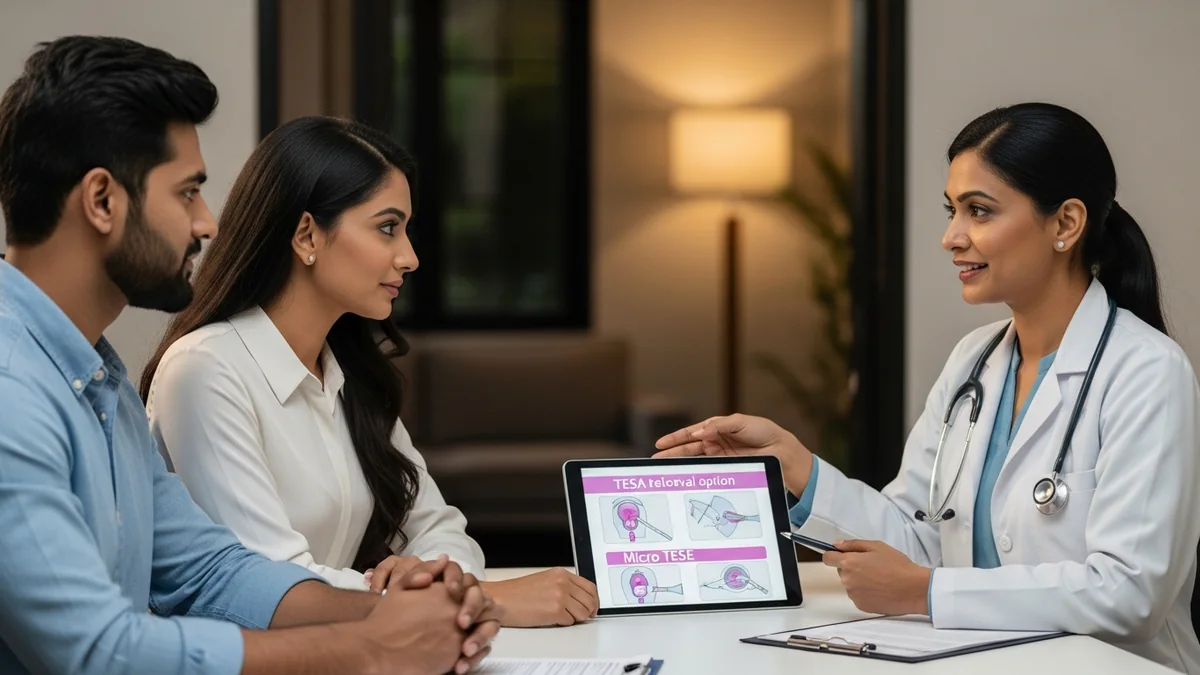
If you've been diagnosed with azoospermia or are experiencing difficulty conceiving, it's essential to seek the advice of a qualified fertility specialist. A specialist can perform a thorough evaluation, determine the cause of your infertility, and recommend the most appropriate treatment options. Learn more about our TESA & micro-TESE surgical sperm retrieval. For personalised guidance, book a consultation with Dr. Rukkayal Fathima.

Dr. Rukkayal Fathima
MBBS, MS (OBG), MRCOG (UK), FRM (Kiel University)
Fertility Specialist, Obstetrician, Gynecologist & Laparoscopic Surgeon
Dr. Rukkayal Fathima is one of India's leading Gynaecologists and the best fertility doctor in Chennai. She has 12+ years of experience and treated 3000+ patients. She specialises in IVF, ICSI, TESA/Micro TESE, IUI, Early Pregnancy Scan, Menopause advice, and Gynaecological surgeries. She is a Co-founder & Director of Yaal Fertility and Women's Centre, the Best Fertility Center in Chennai.
Have Questions About Male Fertility?
Every situation is unique. Dr. Rukkayal Fathima provides personalised, evidence-based guidance across multiple locations in Chennai.
Frequently Asked Questions
TESA involves a needle aspiration of testicular tissue, while Micro TESE uses an operating microscope to identify tubules more likely to contain sperm. Micro TESE aims to minimize tissue damage and improve sperm retrieval rates, particularly in non-obstructive azoospermia.
Success rates vary, but Micro TESE generally has a higher sperm retrieval rate (around 45-50%) compared to TESA, especially in men with non-obstructive azoospermia. Factors like previous testicular procedures and hormone levels can influence the outcome.
The cost of Micro TESE in Chennai can vary depending on the hospital, surgeon's fees, and anaesthesia. Generally, it ranges from ₹70,000 to ₹1,20,000. This cost typically includes the surgical procedure and initial sperm processing, but not subsequent IVF treatments.
Both procedures carry risks such as bleeding, infection, and testicular damage. Micro TESE, while more precise, still poses a risk of hormone imbalance and reduced testosterone levels. These risks are generally low when performed by an experienced fertility specialist.
Yes, Micro TESE is generally considered superior to conventional TESE, especially for non-obstructive azoospermia. Studies show Micro TESE has a 1.5 times higher chance of successful sperm retrieval. It allows for targeted tissue extraction, minimizing damage and maximizing sperm yield.
Recovery typically involves a few days of rest and pain management. Most men can return to normal activities within a week. Swelling and discomfort are common but usually subside quickly. Your doctor will provide specific post-operative instructions.
Consult Dr. Rukkayal in Chennai
Available at 4 fertility clinic locations across Chennai. Walk-ins welcome; appointments preferred.
No. 747, Poonamallee High Road, Alagappa Nagar, Kilpauk, Chennai – 600 010
No. 149/1, Luz Church Road, Bhaskarapuram, Mylapore, Chennai – 600 004
No. 95, Plot No. 1, Velachery Main Road, Devi Karumariamman Nagar, Pallikaranai, Chennai – 600 100
Dr. Rukkayal is also a visiting consultant at Apollo Hospital, Motherhood Hospital, Cloud Nine Hospital, MGM Hospital, Metha Hospital and St. Isabel Hospital in Chennai. View all clinic locations