Laparoscopy: Is It Needed for Infertility?

This article is part of our guide on Endoscopy Treatment in Chennai — see the full treatment overview, success rates, and costs.
Laparoscopy for infertility is a minimally invasive surgical procedure used to diagnose and sometimes treat conditions affecting a woman's reproductive organs. It's often considered when other tests haven't provided a clear answer for infertility. In Chennai, many couples seek this procedure to identify and address underlying issues hindering their ability to conceive.
What Is Laparoscopy and How Does It Work
Laparoscopy, also known as keyhole surgery, is a surgical technique where a small incision, typically less than an inch, is made in the abdomen. Through this incision, a laparoscope – a thin, flexible tube with a camera and light source – is inserted. This allows the surgeon to visualise the pelvic organs, including the uterus, fallopian tubes, and ovaries, on a monitor. Additional small incisions may be made to insert other instruments for diagnostic or therapeutic purposes.
During a diagnostic laparoscopy, the surgeon looks for abnormalities such as endometriosis, adhesions (scar tissue), pelvic inflammatory disease (PID), fibroids, cysts, and tubal blockages. If abnormalities are found, the surgeon can often treat them during the same procedure, making it a diagnostic and therapeutic intervention. For instance, endometriosis can be removed or ablated, adhesions can be cut to free up organs, and blocked fallopian tubes can sometimes be opened.
The procedure is typically performed under general anaesthesia. The abdomen is inflated with carbon dioxide gas to create space for better visualisation. Once the procedure is complete, the gas is released, the instruments are removed, and the incisions are closed with sutures or surgical tape. The diagnostic yield of laparoscopy is often higher than less invasive methods, which can lead to more targeted and effective treatment strategies. In my clinical experience, patients often feel reassured knowing that a direct visual examination has been performed to identify potential issues.
Who Needs Laparoscopy
Laparoscopy is not the first-line investigation for all infertility cases. It is usually considered in specific situations where other, less invasive tests have been inconclusive or suggestive of certain conditions. Some common indications for laparoscopy in infertility include:
- Unexplained Infertility: When routine fertility testing (semen analysis, ovulation testing, hysterosalpingogram) reveals no obvious cause for infertility, laparoscopy can help identify hidden conditions such as mild endometriosis or subtle pelvic adhesions. ASRM suggests considering laparoscopy for young women with infertility of more than 3 years duration.
- Suspected Endometriosis: Women experiencing pelvic pain, painful periods (dysmenorrhea), or pain during intercourse (dyspareunia) may have endometriosis. Laparoscopy is the gold standard for diagnosing and staging endometriosis.
- History of Pelvic Inflammatory Disease (PID): PID can cause scarring and blockages in the fallopian tubes, leading to infertility. Laparoscopy can assess the extent of tubal damage and potentially repair it.
- Suspected Tubal Blockage: While a hysterosalpingogram (HSG) can indicate tubal blockage, laparoscopy can confirm the diagnosis and, in some cases, allow for tubal repair.
- Pelvic Pain: Chronic pelvic pain can be associated with various conditions, including endometriosis, adhesions, and ovarian cysts. Laparoscopy can help diagnose the cause of the pain and guide treatment.
- Prior Pelvic Surgery: Women with a history of pelvic surgery may have developed adhesions that are contributing to infertility. Laparoscopy can identify and remove these adhesions.
Patients often ask me if laparoscopy is necessary for infertility. The answer depends on their individual circumstances. It's not a routine procedure, but it can be invaluable in certain cases. I often explain that it's like having a "look inside" to get a clearer picture when other tests leave us with unanswered questions. NICE guidelines state that medical history should be considered before deciding whether diagnostic laparoscopy should be performed.
Benefits of Laparoscopy for Infertility
Laparoscopy offers several potential benefits in the evaluation and management of infertility:
- Accurate Diagnosis: Laparoscopy provides a direct view of the pelvic organs, allowing for a more accurate diagnosis of conditions that may be contributing to infertility.
- Simultaneous Treatment: In many cases, the surgeon can treat the identified abnormalities during the same laparoscopic procedure, avoiding the need for a second surgery.
- Minimally Invasive: Compared to traditional open surgery, laparoscopy involves smaller incisions, resulting in less pain, shorter hospital stays, and faster recovery times.
- Improved Pregnancy Rates: By diagnosing and treating conditions such as endometriosis, adhesions, and tubal blockages, laparoscopy can improve a woman's chances of conceiving, either naturally or with assisted reproductive technologies (ART). Jin's meta-analysis identified laparoscopic surgery to increase live birth rates (RR 1.52, 95% CI 1.26–1.84, p < 0.01) and pregnancy rates (RR of 1.44, 95% CI 1.24–1.68, p < 0.01) for minimal/mild endometriosis.
- Reduced Need for ART: In some cases, laparoscopy can correct underlying issues to the point where couples can conceive naturally, reducing or eliminating the need for more invasive and expensive ART treatments like IVF.
Laparoscopy can remove physical obstacles such as adhesions, cysts, or mild endometriosis, allowing the sperm and egg to meet naturally. I have seen many patients who were able to conceive naturally after laparoscopic surgery to remove adhesions that were preventing the fallopian tubes from functioning properly.
Laparoscopy Step-by-Step Process
The process of laparoscopy for infertility typically involves the following steps:
- Consultation and Evaluation: The patient meets with the gynaecologist or fertility specialist for a thorough evaluation, including a review of her medical history, physical examination, and any previous test results. The doctor will discuss the potential benefits and risks of laparoscopy and answer any questions the patient may have.
- Pre-operative Preparation: Before the procedure, the patient will undergo routine blood tests and may need to avoid eating or drinking for a certain period. A bowel preparation may also be required to clear the intestines.
- Anaesthesia: Laparoscopy is typically performed under general anaesthesia, so the patient will be asleep during the procedure.
- Incision and Insufflation: A small incision is made, usually near the navel. Carbon dioxide gas is introduced into the abdomen to create space for better visualisation.
- Laparoscopic Examination: The laparoscope is inserted through the incision, and the pelvic organs are examined for any abnormalities.
- Treatment (if necessary): If any abnormalities are found, such as endometriosis, adhesions, or cysts, they can be treated during the same procedure using specialized instruments inserted through additional small incisions.
- Closure: Once the procedure is complete, the gas is released, the instruments are removed, and the incisions are closed with sutures or surgical tape.
- Recovery: The patient is monitored in the recovery room until she is fully awake. Most patients can go home the same day or the next day.
- Post-operative Care: The patient will receive instructions on wound care, pain management, and activity restrictions. A follow-up appointment will be scheduled to monitor healing and discuss the findings of the laparoscopy.
Hysterolaparoscopy, combining hysteroscopy (examination of the uterus) with laparoscopy, may also be performed. A 2025 study evaluating 94 cases found pelvic pathology in 51.7% and intrauterine pathology in 18.1% of patients.
Risks and Side Effects
While laparoscopy is generally considered a safe procedure, it is important to be aware of the potential risks and side effects:
- Infection: As with any surgical procedure, there is a risk of infection at the incision sites.
- Bleeding: Bleeding can occur during or after the procedure, although it is usually minimal.
- Damage to Organs: There is a small risk of damage to nearby organs, such as the bowel, bladder, or blood vessels.
- Adverse Reaction to Anaesthesia: Some patients may experience an adverse reaction to the anaesthesia.
- Blood Clots: Rarely, blood clots can form in the legs or lungs after surgery.
- Adhesions: Although laparoscopy is often used to remove adhesions, it can sometimes lead to the formation of new adhesions.
- Shoulder Pain: Shoulder pain can occur after laparoscopy due to the carbon dioxide gas used to inflate the abdomen.
- Hernia: In rare cases, a hernia can develop at the incision site.
It's essential to discuss these potential risks with your doctor before undergoing laparoscopy. They can provide a more detailed explanation based on your individual medical history and circumstances.
What to Expect After Laparoscopy
After laparoscopy, you can expect some pain and discomfort at the incision sites. This can usually be managed with over-the-counter or prescription pain medication. You may also experience some bloating and shoulder pain due to the carbon dioxide gas used during the procedure.
Most patients can return to their normal activities within a week or two, depending on the extent of the surgery. Your doctor will provide specific instructions on wound care, activity restrictions, and follow-up appointments.
It's important to contact your doctor if you experience any of the following symptoms after laparoscopy:
- Fever
- Severe pain
- Excessive bleeding
- Signs of infection (redness, swelling, pus)
- Difficulty breathing
- Nausea or vomiting
In my experience, most patients recover quickly and smoothly after laparoscopy. Following your doctor's instructions carefully can help ensure a successful recovery.
When to Seek Professional Help
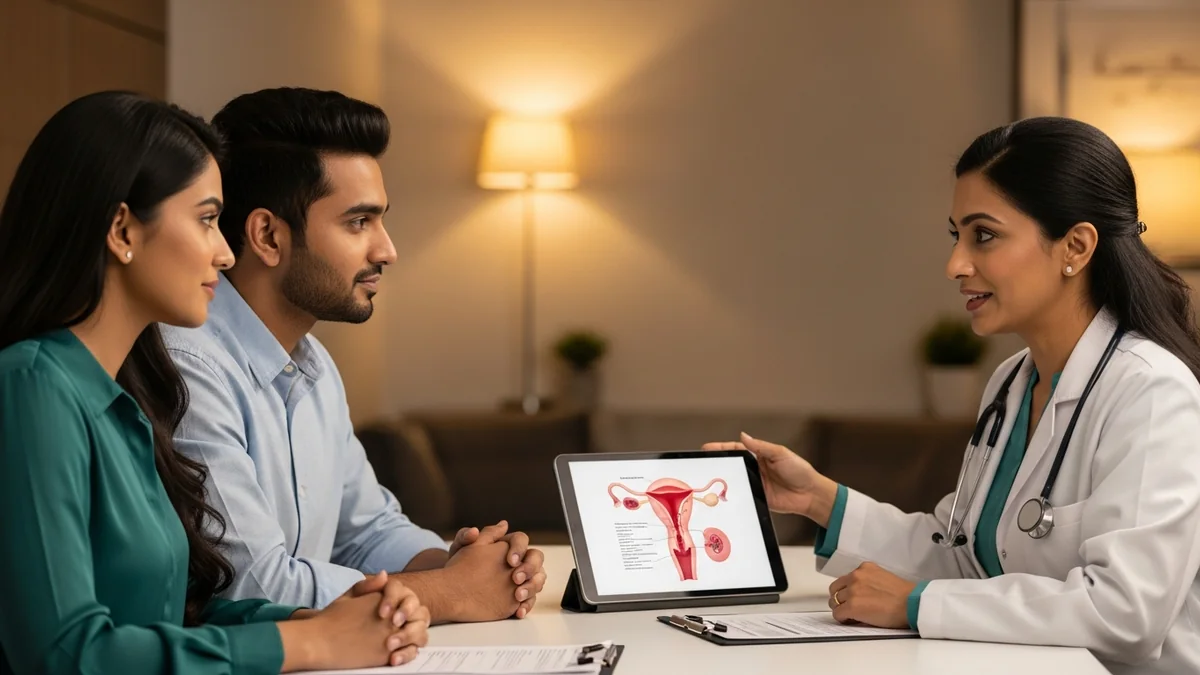
Laparoscopy can be a valuable tool in the diagnosis and treatment of infertility, but it is not right for everyone. If you have been struggling to conceive and other tests have been inconclusive, or if you have symptoms such as pelvic pain or painful periods, talk to a fertility specialist about whether laparoscopy is an appropriate option for you.
Learn more about our laparoscopy treatment in Chennai. For personalised guidance, book a consultation with Dr. Rukkayal Fathima.

Dr. Rukkayal Fathima
MBBS, MS (OBG), MRCOG (UK), FRM (Kiel University)
Fertility Specialist, Obstetrician, Gynecologist & Laparoscopic Surgeon
Dr. Rukkayal Fathima is one of India's leading Gynaecologists and the best fertility doctor in Chennai. She has 12+ years of experience and treated 3000+ patients. She specialises in IVF, ICSI, TESA/Micro TESE, IUI, Early Pregnancy Scan, Menopause advice, and Gynaecological surgeries. She is a Co-founder & Director of Yaal Fertility and Women's Centre, the Best Fertility Center in Chennai.
Have Questions About Endoscopy Treatment?
Every situation is unique. Dr. Rukkayal Fathima provides personalised, evidence-based guidance across multiple locations in Chennai.
Frequently Asked Questions
Laparoscopy is a minimally invasive surgical procedure where a small incision is made to insert a camera and instruments to visualize the pelvic organs. It helps diagnose and treat conditions like endometriosis, adhesions, and tubal blockages that can contribute to infertility. It offers a direct view, aiding in more accurate diagnoses.
Laparoscopy can improve fertility by identifying and correcting structural issues within the reproductive system. It allows for the removal of adhesions, cysts, and mild endometriosis, which may physically obstruct the meeting of sperm and egg or interfere with implantation. Correcting these issues can enhance natural conception or improve the success of fertility treatments.
Like any surgical procedure, laparoscopy carries some risks. These include infection, bleeding, damage to nearby organs, and adverse reactions to anaesthesia. However, these complications are rare. The benefits of accurate diagnosis and treatment often outweigh the risks, especially when performed by an experienced surgeon.
The cost of laparoscopy for infertility in Chennai can vary depending on the hospital, the surgeon's fees, and the complexity of the procedure. Generally, it ranges from ₹40,000 to ₹80,000. This includes the cost of the surgery, anaesthesia, and hospital stay. It's best to consult with the hospital or clinic for a precise estimate.
No, laparoscopy is not always the first step in infertility treatment. It is typically recommended when other non-invasive tests, such as ultrasound or hormone level assessments, don't provide a clear diagnosis, or when there's a suspicion of conditions like endometriosis or pelvic adhesions. The need for laparoscopy is determined on a case-by-case basis.
The recovery period after laparoscopy is generally short. Most patients can return to their normal activities within a week or two. There may be some pain and discomfort at the incision site, which can be managed with pain medication. Following post-operative instructions is crucial for a smooth recovery.
Consider laparoscopy if you have unexplained infertility, pelvic pain, painful periods, or a history of pelvic infections. If initial fertility tests are inconclusive or suggest potential structural issues, discuss laparoscopy with your fertility specialist. It can provide valuable insights and treatment options.
Consult Dr. Rukkayal in Chennai
Available at 4 fertility clinic locations across Chennai. Walk-ins welcome; appointments preferred.
No. 747, Poonamallee High Road, Alagappa Nagar, Kilpauk, Chennai – 600 010
No. 149/1, Luz Church Road, Bhaskarapuram, Mylapore, Chennai – 600 004
No. 95, Plot No. 1, Velachery Main Road, Devi Karumariamman Nagar, Pallikaranai, Chennai – 600 100
Dr. Rukkayal is also a visiting consultant at Apollo Hospital, Motherhood Hospital, Cloud Nine Hospital, MGM Hospital, Metha Hospital and St. Isabel Hospital in Chennai. View all clinic locations