Low Sperm Count Treatment in Chennai
Targeted evaluation and treatment for oligospermia in Chennai by Dr. Rukkayal Fathima

A low sperm count — medically known as oligospermia — is one of the most common causes of male infertility. If your semen analysis shows fewer than 15 million sperm per millilitre, it means fewer sperm are available to reach and fertilize the egg. But a low count does not mean you cannot become a father. Dr. Rukkayal Fathima offers a structured approach: first identify why the count is low, then choose the most effective treatment — whether that's lifestyle optimization, medical therapy, or assisted reproduction.
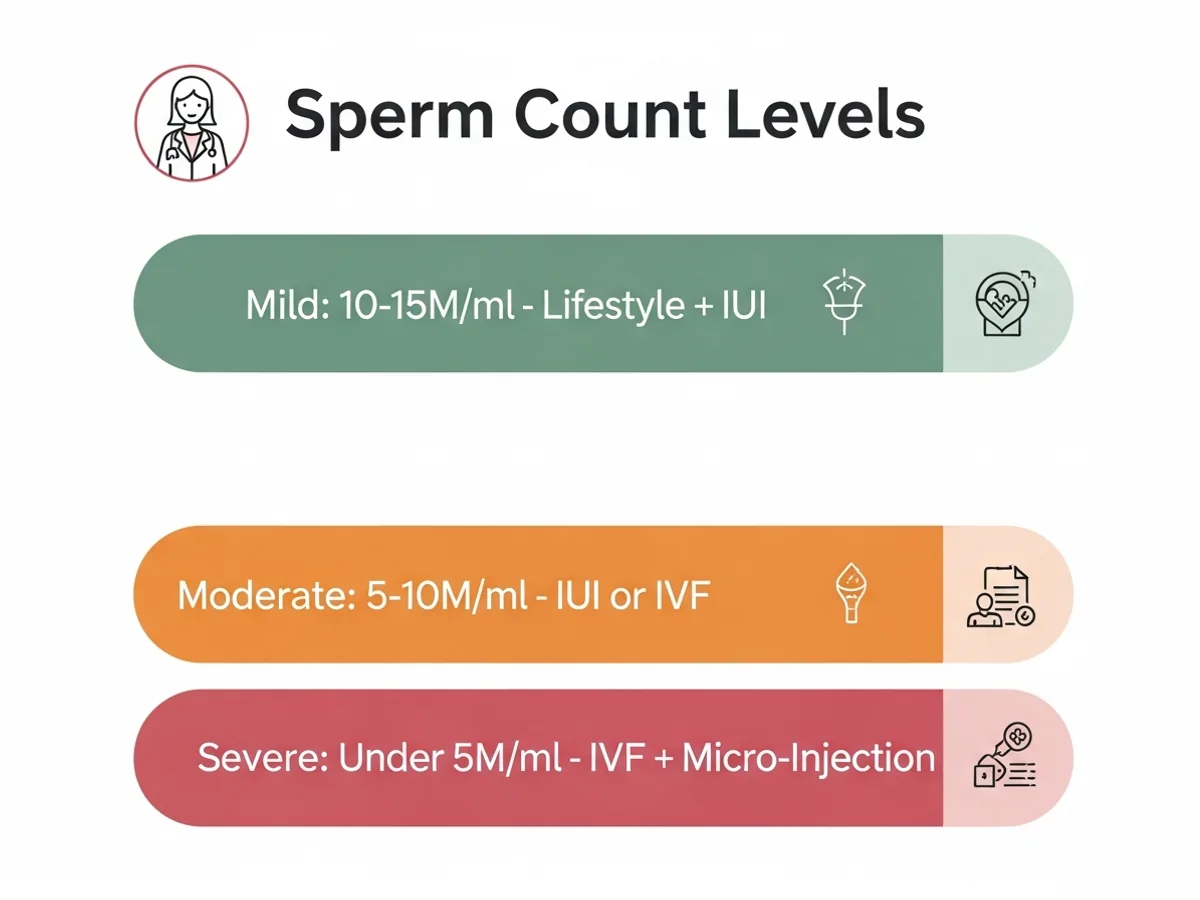
The severity of oligospermia matters for treatment decisions. Mild oligospermia (10-15 million/ml) often responds to lifestyle changes and medication. Moderate cases (5-10 million/ml) may benefit from IUI with sperm preparation. Severe oligospermia (under 5 million/ml) typically requires IVF with ICSI, where Dr. Rukkayal's direct lab expertise ensures the best sperm are selected for fertilization.

3000+
Male Factor Cases Treated
70%
Sperm Recovery Rate
When Should You Get Your Sperm Count Checked?
You should see a specialist if you experience:
- Unable to conceive after 12 months of trying
- Previously diagnosed with low sperm count
- History of varicocele, testicular injury, or undescended testes
- Taking medications that may affect fertility
- Known exposure to environmental toxins or excessive heat
- Partner is over 35 and conception has not occurred within 6 months
- Previous fertility treatment did not succeed
Understanding Oligospermia
Oligospermia is classified by severity: mild (10-15 million/ml), moderate (5-10 million/ml), and severe (less than 5 million/ml). Normal sperm count is 15 million or more per millilitre. A low count can be caused by hormonal imbalances, varicocele, lifestyle factors, genetic conditions, or infections. In many cases, the cause is identifiable and treatable. Even when the count cannot be significantly improved, advanced techniques like ICSI need only a single healthy sperm per egg — making biological fatherhood achievable for most men with oligospermia. The key is thorough evaluation to understand the underlying cause and choose the right treatment path.
What Causes Low Sperm Count?
Varicocele
Enlarged veins in the scrotum increase testicular temperature and are the most common reversible cause of low sperm count.
Hormonal Imbalance
Low testosterone, high prolactin, or thyroid disorders can impair sperm production.
Heat Exposure
Prolonged exposure to heat from saunas, hot baths, laptops on lap, or tight clothing raises scrotal temperature.
Lifestyle Factors
Smoking, excessive alcohol, obesity, and stress all negatively impact sperm production.
Medications
Certain drugs including testosterone supplements, steroids, and some antidepressants can reduce sperm count.
Infections
Past or current infections of the reproductive tract can damage sperm production or transport.
Genetic Factors
Y-chromosome microdeletions or chromosomal abnormalities can cause persistently low counts.
Toxin Exposure
Occupational exposure to pesticides, heavy metals, or industrial chemicals affects sperm production.
How We Evaluate Low Sperm Count
Comprehensive Semen Analysis
Two separate analyses 2-4 weeks apart to confirm the finding — a single low result may not be representative.
Hormonal Assessment
FSH, LH, testosterone, prolactin, and thyroid function to identify hormonal causes.
Scrotal Ultrasound
Detects varicocele, structural abnormalities, and assesses testicular volume.
Sperm DNA Fragmentation
Evaluates DNA integrity — high fragmentation in remaining sperm affects fertilization and embryo quality.
Genetic Screening
Karyotype and Y-chromosome microdeletion testing when count is very low or no reversible cause is found.
Lifestyle & Medication Review
Detailed assessment of modifiable factors including medications, supplements, and occupational exposures.
Conditions We Treat
How We Treat Low Sperm Count
Lifestyle Optimization
Stopping smoking, reducing alcohol, maintaining healthy BMI, avoiding heat exposure, and adding antioxidant supplements. These changes take 3 months to show in semen analysis but can make a meaningful difference in mild cases.
Hormonal Therapy
For men with hormonal imbalances, targeted medications like clomiphene citrate or gonadotropins can stimulate the testes to produce more sperm over 3-6 months.
Varicocele Treatment
Surgical or interventional correction of varicocele removes the heat stress on the testes and can improve sperm count in many men.
IUI with Sperm Concentration
For mild to moderate oligospermia, sperm washing and concentration techniques maximize the number of healthy sperm delivered to the uterus.
IVF with ICSI
For severe oligospermia, ICSI requires only one healthy sperm per egg. Dr. Rukkayal works directly in the lab to ensure optimal sperm selection for each egg.
Why Choose Dr. Rukkayal?
- Systematic approach: identify the cause before choosing treatment
- Two semen analyses before any diagnosis — we don't rush to conclusions
- Advanced DNA fragmentation testing to assess sperm quality beyond count
- Direct coordination between clinical and lab teams for ICSI cases
- Evidence-based hormonal therapy protocols
- Affordable, step-by-step treatment — starting with least invasive options first
- Internationally trained with MRCOG (UK) and FRM (Germany)
- Convenient locations across Chennai — Egmore/Chetpet (morning), Mylapore (evening), and Tambaram — plus visiting consultant at Apollo, Motherhood & Cloudnine hospitals.
Your Treatment Journey
Initial Assessment
Detailed history, first semen analysis, and discussion with both partners about the evaluation process.
Confirmatory Testing
Repeat semen analysis, hormonal panel, ultrasound, and any additional tests based on initial findings.
Diagnosis & Discussion
Clear explanation of your results, the likely cause, and all available treatment options ranked by suitability.
Treatment
Tailored to your severity — lifestyle changes for mild, medical therapy for moderate, or IVF-ICSI for severe cases.
Follow-up
Re-testing after 3 months for medical therapy, or ongoing monitoring during assisted reproduction cycles.
Have Questions About Your Treatment?
Book a consultation with Dr. Rukkayal Fathima to understand your options and next steps.
Frequently Asked Questions
A count of 5 million/ml is moderate oligospermia. While natural conception is less likely, IUI with sperm preparation can work in some cases. If your partner's evaluation is normal and IUI doesn't succeed after 3-4 cycles, IVF with ICSI gives the highest success rates since only one sperm per egg is needed.
Antioxidant supplements (CoQ10, zinc, selenium, vitamin E, L-carnitine) have evidence supporting modest improvements in sperm parameters for some men. They work best alongside lifestyle changes and take 3 months to show effect. They are not a substitute for medical treatment when a specific cause is identified.
Sperm production takes approximately 74 days. After starting treatment — whether lifestyle changes, supplements, or hormonal therapy — we recheck after 3 months. Some men see significant improvement; others may need assisted reproduction. We set realistic timelines from the start.
Not necessarily. Many men with low sperm counts have normal testosterone. However, we always check because hormonal imbalances are a treatable cause. Importantly, taking external testosterone actually worsens sperm count — a common mistake that we screen for.
In about 60-70% of men with varicocele, surgical repair leads to improvement in semen parameters. The improvement takes 3-6 months to appear. Whether repair is recommended depends on varicocele size, your age, your partner's age, and the degree of semen abnormality.
Yes. ICSI success rates are excellent even with severe oligospermia because only one healthy sperm is needed per egg. The key is selecting the best quality sperm, which is where Dr. Rukkayal's direct involvement in the IVF lab makes a difference.
Yes, genetic causes account for about 15% of severe oligospermia. Y-chromosome microdeletions and chromosomal abnormalities can impair sperm production. We recommend genetic testing when the count is under 5 million/ml or when no other cause is found, as it also has implications for future children.
Age helps, but a persistently low count still reduces your monthly chance of conception. We recommend evaluation after 6-12 months of trying. The advantage of youth is that you have time for conservative approaches like lifestyle changes and medical therapy before considering assisted reproduction.
In many cases, lifestyle changes can lead to meaningful improvements in sperm count and overall semen quality. Quitting smoking, reducing alcohol intake, maintaining a healthy weight, managing stress, and avoiding excessive heat exposure are all evidence-based steps. Dietary adjustments that include antioxidant-rich foods along with targeted supplements such as zinc, CoQ10, and L-carnitine may further support sperm production. These changes typically take about three months to reflect in a semen analysis, since that is the duration of a full sperm production cycle.
Related Specialties
Related Articles
Foods to Improve Sperm Quality & Health
Learn how to improve sperm health naturally with diet & lifestyle changes. Expert advice from a leading fertility specialist in Chennai.
8 min read
Lifestyle Factors Affecting Male Fertility
Explore how lifestyle impacts male fertility in Chennai. Learn changes to boost sperm health and improve chances of conception.
8 min read
Low Sperm Count: Causes & Treatment
Concerned about low sperm count? Learn the causes, diagnosis, and treatment options available in Chennai. Consult Dr. Rukkayal!
12 min read
Semen Analysis Report: Understanding Your Results
Understand your semen analysis report in Chennai. Normal ranges, interpretation, and next steps explained by Dr. Rukkayal.
10 min read
Ready to Get Started?
Book a consultation with Dr. Rukkayal Fathima about your treatment options
Book AppointmentBook Consultation
Consultation Booked!
Thank you for reaching out. Our team will contact you shortly to confirm your appointment.
Need urgent help? Call us